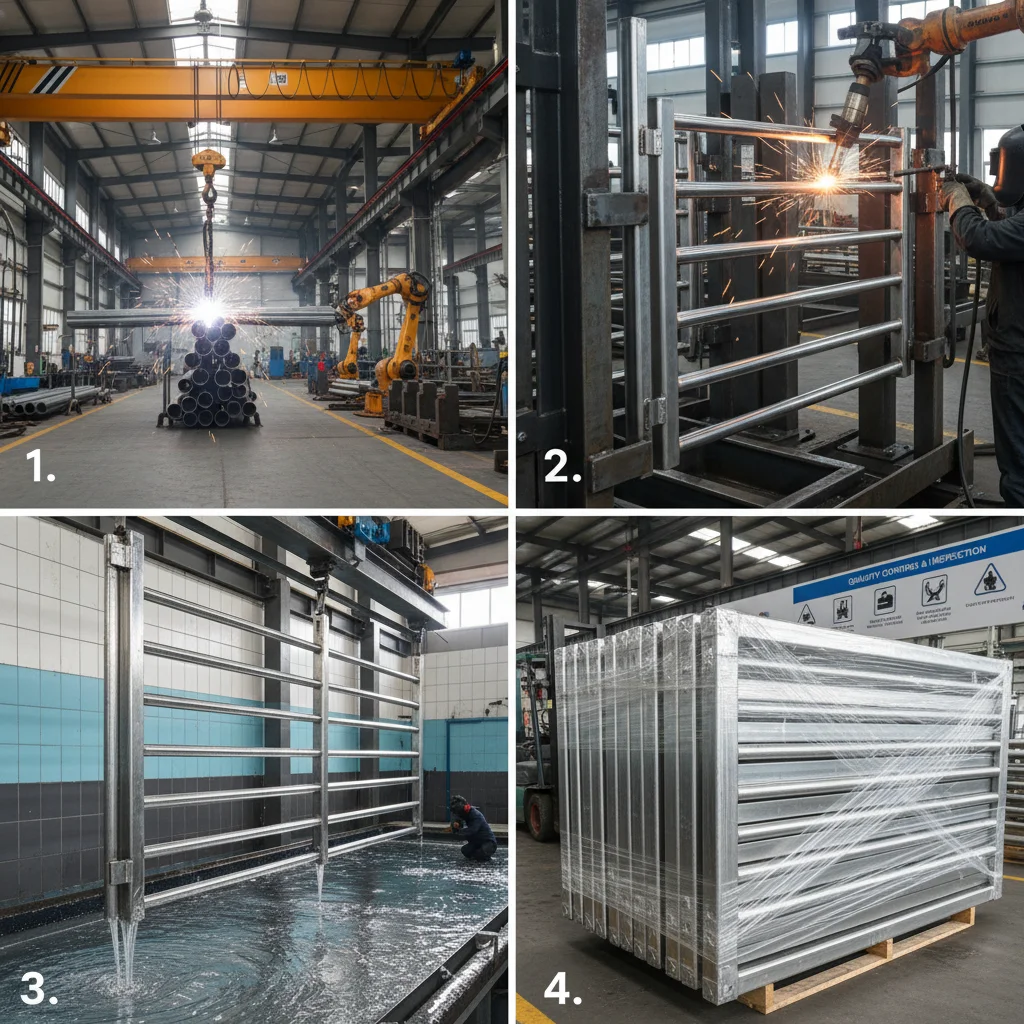
In the evolving landscape of modern agriculture and animal husbandry, the implementation of high-quality livestock mesh panels has become a cornerstone for ensuring animal safety and operational efficiency. These specialized fencing solutions are designed to provide a secure boundary that prevents livestock escape while protecting animals from external predators, making them indispensable for farms of all sizes.
Globally, the demand for robust containment systems is driven by the need for sustainable land management and the optimization of grazing patterns. By utilizing engineered wire mesh, farmers can implement rotational grazing more effectively, which not only improves soil health but also ensures that livestock have access to the freshest forage, directly impacting the quality of meat and dairy production.
Understanding the technical specifications and application methods of livestock mesh panels allows producers to balance the trade-off between initial investment and long-term durability. From choosing the right wire gauge to selecting the appropriate coating for corrosive environments, the right choice in mesh panels transforms a simple fence into a strategic asset for livestock management.

Global Industry Context of Livestock Mesh Panels
The global livestock sector is currently undergoing a massive transition toward precision farming. With the UN Food and Agriculture Organization (FAO) emphasizing the need for increased productivity to feed a growing population, the role of secure containment via livestock mesh panels has shifted from simple boundary marking to a critical component of biosecurity and animal welfare.
In regions like North America, Australia, and Europe, the challenge often lies in managing vast tracts of land while preventing invasive species or predators from entering grazing zones. The industry has responded by developing specialized panels with varying mesh openings and wire diameters, ensuring that whether the target is sheep, goats, or cattle, the fencing is biologically and physically appropriate.
Defining Modern Livestock Mesh Panels
In simple technical terms, livestock mesh panels are prefabricated wire mesh structures, typically constructed from galvanized steel or PVC-coated wire, designed specifically to withstand the pressure and behavior of livestock. Unlike standard chain-link fences, these panels often feature rigid frames and specific aperture sizes (such as 50x100mm) to prevent animals from getting their heads stuck while remaining strong enough to discourage leaning or pushing.
These panels connect modern metallurgical engineering with the practical needs of humanitarian and agricultural projects. By providing a modular "plug-and-play" system, they allow for the rapid establishment of safe zones for animals in diverse environments, ranging from permanent commercial farms to temporary shelters in post-disaster recovery zones where livestock preservation is key to community survival.
The versatility of these panels is further enhanced by customizable heights (typically 4 to 8 feet) and widths (9 to 12 feet). This scalability ensures that the fencing can be tailored to the specific height of the animal breed and the topography of the terrain, reducing the overall material waste and labor costs associated with traditional on-site wire stretching.
Key Factors for High-Performance Panels
Durability is the primary metric for any livestock mesh panels installation. This is achieved through a combination of wire diameter (ranging from 3.00mm to 5.00mm) and high-quality galvanization. The ability of the metal to resist oxidation in humid or saline environments ensures that the panels do not succumb to rust, which could otherwise compromise the structural integrity and potentially injure the livestock.
Structural scalability and stability are managed through the frame design. By utilizing outside frames of 25x25mm or 30x30mm and reinforcing the structure with middle poles (20x20mm or 25x25mm), the panels can withstand significant impact forces. This rigid architecture prevents the "sagging" commonly seen in traditional woven wire fences, maintaining a consistent barrier over many years.
Cost efficiency is not just about the purchase price but the total cost of ownership. High-quality livestock mesh panels reduce the need for frequent repairs and replacements. Furthermore, the availability of various colors—such as grass green or dark green—allows the panels to blend into the natural environment, reducing animal stress and enhancing the aesthetic value of the agricultural landscape.
Global Applications & Use Cases
The application of livestock mesh panels extends far beyond the traditional pasture. In the European Union, these panels are frequently used in organic farming certifications to ensure controlled grazing and separate livestock from protected wildlife corridors. Similarly, in the Americas, they are used as temporary dividers during seasonal livestock movement to organize herds efficiently without the need for permanent concrete structures.
Beyond commercial farming, these systems are vital in remote industrial zones or humanitarian relief operations. For instance, in post-disaster relief, rapidly deployable livestock panels are used to create secure pens for salvaged animals, preventing the spread of disease and protecting the remaining assets of displaced farmers, thereby supporting the long-term economic recovery of the affected region.
Performance Comparison of Livestock Mesh Panel Types
Advantages & Long-Term Value
The transition to professional livestock mesh panels offers a tangible shift in farm reliability. By reducing the incidence of "fence breaks," farmers experience lower stress levels and a significant reduction in lost livestock. The logical advantage lies in the structural consistency; unlike hand-woven fences, these factory-produced panels ensure every inch of the perimeter is equally strong, eliminating the "weak link" problem.
From an emotional and ethical perspective, high-quality fencing provides dignity and safety to the animals. Proper containment prevents injuries caused by gaps in the fence and reduces the need for aggressive herding techniques. Furthermore, the sustainability aspect is highlighted by the longevity of the materials; a single investment in high-grade galvanized panels can last decades, reducing the environmental footprint associated with the constant manufacture and transport of cheaper, disposable alternatives.
Future Trends & Innovations in Fencing
The future of livestock mesh panels is leaning heavily toward "smart fencing." We are seeing the integration of IoT sensors into the fence posts, allowing farmers to receive real-time alerts on their smartphones if a panel is breached or if there is unusual pressure on a specific section of the mesh. This digital transformation allows for a proactive rather than reactive approach to herd security.
Material science is also evolving, with the introduction of nano-coatings that offer superior corrosion resistance compared to traditional hot-dip galvanization. These green-tech coatings are non-toxic and designed to break down safely over decades, aligning with global sustainability goals and reducing the chemical impact on the surrounding soil and groundwater.
Automation in the installation process is another emerging trend. Modular designs are being optimized for robotic installation or quick-click mechanical fastening systems, drastically reducing the manual labor required to secure livestock. This shift not only speeds up deployment but also ensures that the tension and alignment of the panels are mathematically perfect, further enhancing the system's lifespan.
Challenges & Expert Solutions
One of the most common challenges in deploying livestock mesh panels is the unevenness of natural terrain. When panels are installed on slopes or rocky ground, gaps can occur at the bottom of the mesh, providing an escape route for smaller livestock. Expert installers solve this by using "skirting" techniques or custom-trimming the lower edge of the panel to follow the contour of the land.
Another limitation is the potential for "fence leaning" in high-pressure environments, such as during winter when cattle huddle together. To overcome this, we recommend the strategic placement of heavy-duty bracing and the use of a larger outside frame (30x30mm). Increasing the frequency of middle poles in high-traffic areas ensures that the load is distributed evenly across the entire line of fencing.
Finally, corrosion in highly acidic soils or coastal regions remains a hurdle. The solution lies in specifying PVC-coated galvanized wire. The dual-layer protection—a zinc layer for structural bonding and a PVC layer for an environmental seal—effectively doubles the lifespan of the panels in harsh climates, ensuring that the investment remains viable for the long term.
Technical Analysis and Comparison of Livestock Mesh Panel Specifications
| Specification Dimension |
Standard Range |
Durability Score (1-10) |
Primary Application |
| Wire Diameter (3.0mm) |
Light Duty |
6 |
Small animal/Poultry |
| Wire Diameter (5.0mm) |
Heavy Duty |
10 |
Large Cattle/Bulls |
| Mesh Opening (50x100mm) |
Medium Aperture |
8 |
Sheep and Goats |
| Frame Size (30x30mm) |
Reinforced |
9 |
High-pressure perimeters |
| Height (4ft - 8ft) |
Variable |
7 |
Custom breed containment |
| PVC Coating |
Protective |
10 |
Coastal/Humid regions |
FAQS
Livestock mesh panels offer superior structural rigidity due to their prefabricated frames. Unlike woven wire, which can sag or loosen over time, panels maintain a consistent shape and tension. This significantly reduces the labor required for ongoing maintenance and provides a more reliable barrier against determined animals or predators.
With a high-quality hot-dip galvanization and an additional PVC coating, our panels can last between 15 to 25 years, even in humid or saline environments. The PVC layer acts as a primary shield against moisture and oxygen, preventing the zinc layer from oxidizing prematurely.
Yes, they are highly sustainable because of their longevity. By reducing the need for frequent replacements, they lower the total carbon footprint associated with steel production and transport. Additionally, galvanized steel is 100% recyclable at the end of its lifecycle.
Absolutely. We offer a range of mesh openings (e.g., 50x100mm and 50x150mm) and heights (4ft to 8ft) to suit different animal sizes. For example, smaller openings are ideal for goats, while higher, heavier-gauge panels are designed for larger cattle breeds.
Professional installation involves setting the posts first and then adapting the panel height to the terrain. This can be done by slightly digging the bottom of the panel into the soil or using custom-cut skirts to ensure there are no gaps between the mesh and the ground.
Grass green and dark green are the most popular choices as they blend into the natural landscape, reducing the visual stress for the animals and maintaining the beauty of the farm. However, bright colors like yellow or red can be used for temporary safety zones or high-visibility markers.
Conclusion
In summary, the strategic use of livestock mesh panels represents a significant upgrade in animal containment technology. By combining high-grade materials, such as 3.0mm-5.0mm galvanized wire, with rigid frame architectures, these systems provide an unparalleled balance of durability, safety, and cost-efficiency. From the reduction of animal escape incidents to the long-term sustainability of the materials, these panels serve as a critical infrastructure component for any modern agricultural operation.
Looking forward, as the industry moves toward smart farming and higher animal welfare standards, the role of precision fencing will only grow. We encourage farm owners and project managers to prioritize structural integrity and environmental resistance when selecting their fencing solutions. Investing in premium mesh panels today ensures a more secure, manageable, and sustainable farming tomorrow. Visit our website for more professional solutions: www.haotianmesh.com