Managing livestock requires a delicate balance between animal welfare and operational security, where the quality of containment infrastructure plays a pivotal role. High-performance livestock gate panels serve as the primary line of defense in agricultural settings, ensuring that animals remain secure while providing farmers with the flexibility to manage herd movements efficiently. In an era of industrial-scale farming, the transition from traditional timber gates to engineered wire mesh solutions has revolutionized how livestock are handled across the globe.
The global demand for robust agricultural containment is driven by the need for increased efficiency and a reduction in animal stress during sorting and transport. According to industry trends aligned with ISO quality standards, the adoption of welded wire mesh for livestock gate panels has surged due to their superior strength-to-weight ratio and resistance to environmental degradation. Whether in the sprawling ranchlands of North America or the intensive farming hubs of Europe and Asia, the reliability of these panels directly impacts the economic viability of livestock operations.
However, many producers still struggle with the "failure point" of traditional fencing—rust, sagging, and structural collapse under the pressure of heavy animals. This is where modern, precision-welded livestock gate panels provide a definitive solution. By combining high-tensile drawn steel with advanced zinc coatings, these components eliminate the vulnerabilities of older systems, offering a sustainable, long-term investment for the modern agricultural enterprise.

The Global Relevance of Livestock Gate Panels
In the context of global food security, the efficient management of livestock is non-negotiable. livestock gate panels are not merely barriers; they are critical tools that facilitate the safe movement of cattle, sheep, and pigs. By utilizing standardized, high-strength panels, farmers can create modular systems that adapt to the growth of their herd, reducing the manual labor required for constant fence repair and reconfiguration.
Furthermore, the international trade of livestock necessitates temporary but secure holding areas. The shift toward modular livestock gate panels allows for rapid deployment in transport hubs and livestock markets. This scalability ensures that animal welfare standards are maintained during transit, preventing injuries and reducing the economic losses associated with livestock stress.
Defining Modern Livestock Gate Panels
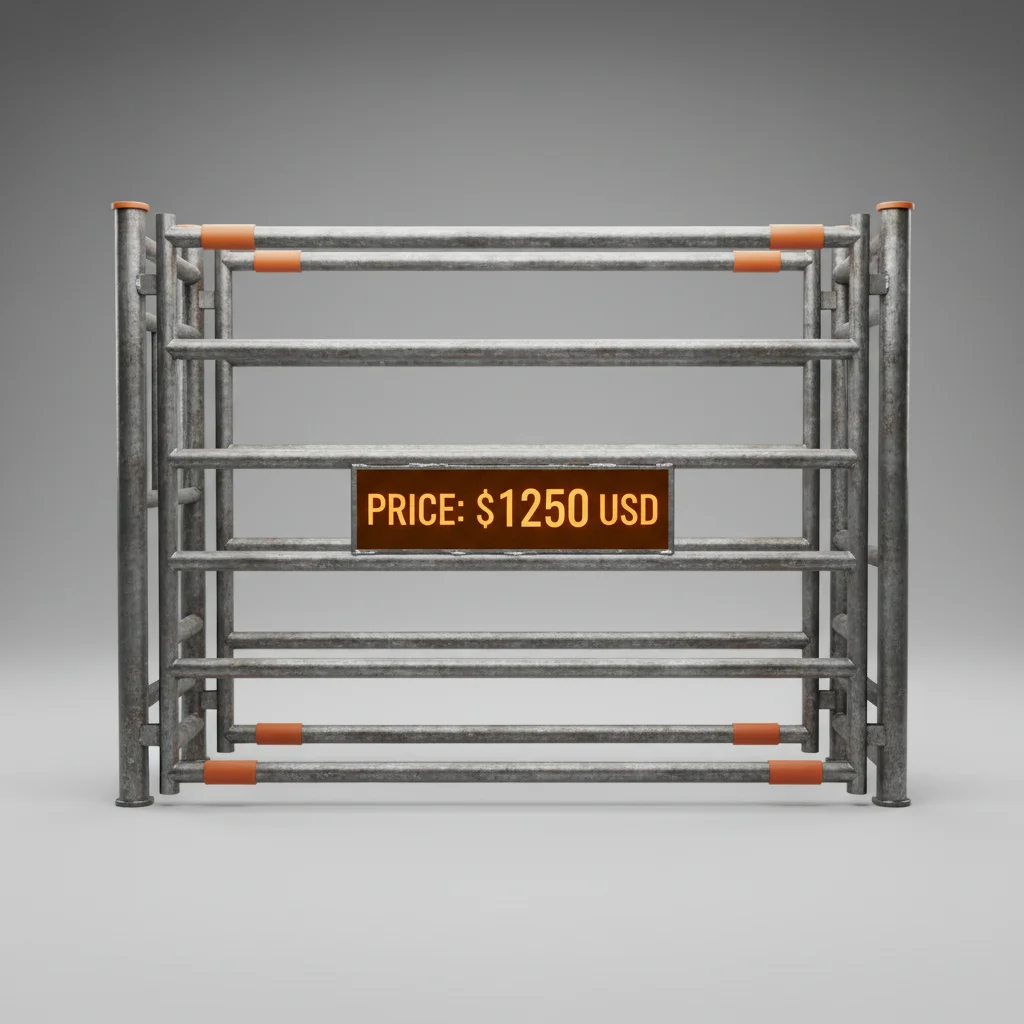
At its core, a livestock gate panel is a prefabricated structural unit made from heavy-duty wire mesh or steel tubing, designed to function as a movable or fixed barrier within an animal enclosure. Unlike generic fencing, these panels are specifically engineered to withstand the "impact loads" delivered by large animals. They combine the rigidity of welded intersections with the flexibility of a modular design, allowing them to be linked together to form pens, chutes, or gated entries.
Modern iterations of these panels leverage high-tensile drawn steel wire, which provides significantly more strength than standard mild steel. This material evolution means that livestock gate panels can be thinner and lighter without sacrificing the structural integrity needed to hold back a thousand-pound bull. This balance of strength and weight is essential for the "rapid-deployment" nature of modern farming.
Beyond simple containment, these panels now incorporate ergonomic design principles. The spacing of the wires is carefully calculated to prevent animals from getting their heads or limbs trapped, while the surface finishing—often powder-coated or galvanized—ensures that there are no sharp edges or rust flakes that could cause injury to the livestock.
Core Components of High-Performance Panels
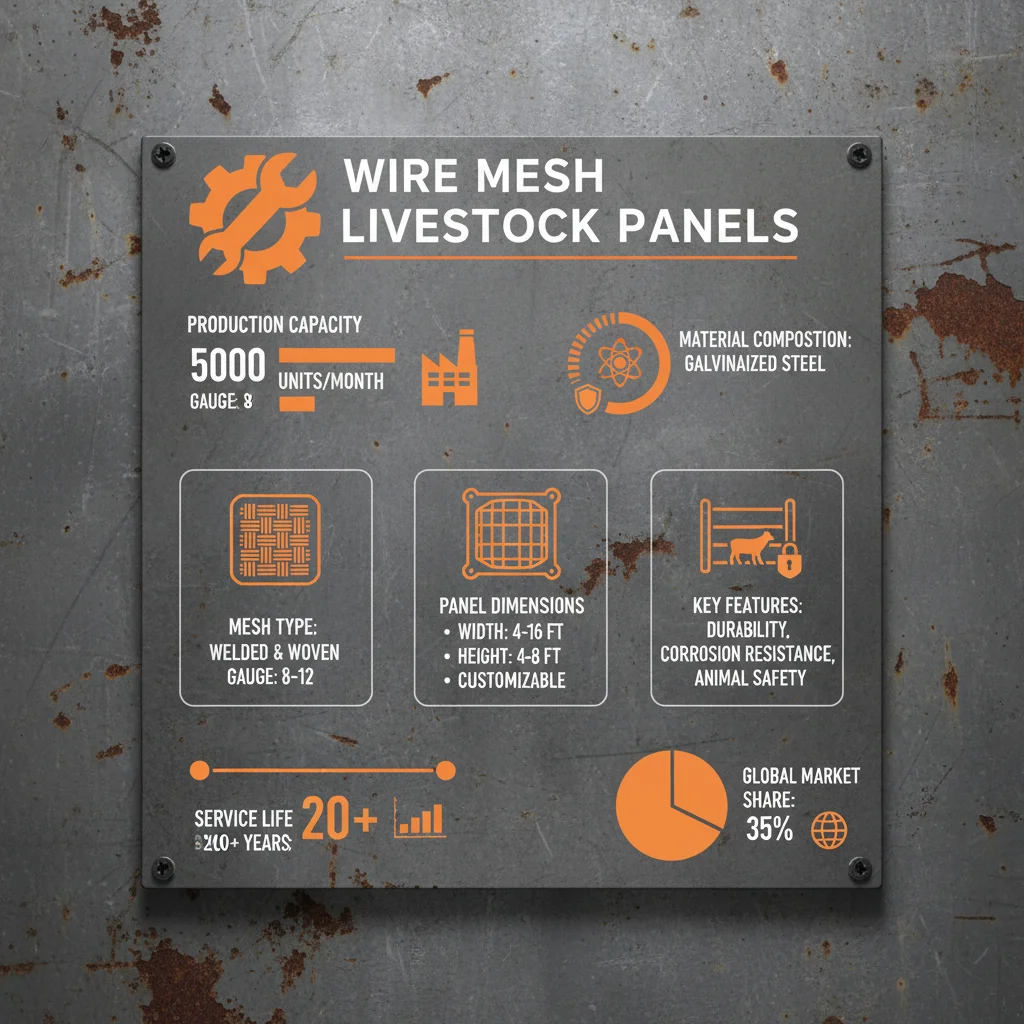
The durability of livestock gate panels starts with the wire material. High-tensile drawn steel wire, typically ranging from 3.5mm to 8mm, ensures that the panel remains rigid under pressure. Every intersection is precision-welded, which prevents the "sagging" effect common in woven wire fences, maintaining a perfect vertical and horizontal alignment over years of use.
Corrosion resistance is the second pillar of quality. In agricultural environments, panels are exposed to moisture, animal waste, and varying pH levels in the soil. By applying a heavy-duty zinc coating of up to 500g/m², livestock gate panels are shielded from oxidation, significantly extending their operational lifespan and reducing the need for frequent replacements.
Finally, the versatility of the panel is defined by its coating and customization. Options such as PVC or powder-coating (like RAL 6005 Forest Green) do more than provide an aesthetic finish; they add an extra layer of physical protection against abrasion. Customizable widths—standardized at 2.5m, 2.75m, and 3m—allow farmers to optimize their space without wasting materials.
Global Applications and Use Cases
In large-scale cattle ranching operations in Brazil and Australia, livestock gate panels are used to create temporary sorting alleys. These modular systems allow ranchers to quickly isolate specific animals for veterinary checks or vaccination without building permanent structures. The ability to rapidly assemble and disassemble these panels is a key driver of operational efficiency in remote industrial zones.
In the European dairy industry, these panels are often integrated into permanent barn layouts to create hygienic and secure calving pens. The use of powder-coated livestock gate panels ensures that the barriers can be easily cleaned and sanitized, meeting strict EU health and safety regulations for animal housing.
Performance Comparison of Livestock Gate Panels Types
Long-Term Value and Operational Advantages
Investing in premium livestock gate panels offers a tangible return on investment through the reduction of OpEx. Traditional fencing requires frequent painting and structural repairs due to rust and sagging. In contrast, high-zinc coated welded mesh panels boast a lifespan that is often 200% longer than standard wire mesh, effectively slashing the long-term maintenance budget for farm owners.
Beyond the financial logic, there is a profound impact on animal safety and handler trust. When a farmer knows that their livestock gate panels will not buckle under the weight of a panicked animal, the entire handling process becomes calmer. This reduction in stress not only protects the animals' health but also ensures the safety of the human operators, fostering a more humane and professional agricultural environment.
Future Trends in Livestock Containment
The future of livestock gate panels is moving toward "smart containment." We are seeing the integration of IoT sensors within fence posts and panels to monitor animal movement and detect breaches in real-time. This digital transformation allows farmers to manage larger herds with fewer staff, as alerts are sent directly to mobile devices the moment a panel is compromised.
Sustainability is also driving material innovation. The industry is exploring eco-friendly powder coatings that reduce Volatile Organic Compounds (VOCs) without sacrificing corrosion resistance. These "green" livestock gate panels align with global goals to reduce the environmental footprint of industrial farming while maintaining high structural standards.
Automation is the final frontier. We anticipate the rise of automated gating systems where livestock gate panels are integrated with RFID readers. This would allow animals to be automatically sorted into different pens based on their electronic ear tags, removing human error from the sorting process and maximizing efficiency in high-volume operations.
Overcoming Challenges in Panel Implementation
One of the primary challenges in deploying livestock gate panels is the variance in terrain. On uneven ground, rigid panels can leave gaps at the bottom, which some animals may attempt to push under. The solution lies in the use of adjustable base brackets and customized panel heights, ensuring a flush fit regardless of the topography.
Another common limitation is the logistics of international shipping. Heavy steel panels can be costly to transport and prone to damage. Expert packing solutions—utilizing reinforced bundling and strategic weight distribution—are essential to ensure that livestock gate panels arrive at the farm in perfect condition, ready for immediate installation.
Finally, the initial cost of premium panels can be a deterrent for small-scale farmers. However, when analyzed through a total cost of ownership (TCO) lens, the reduction in labor for installation (up to 40%) and the decrease in replacement frequency make these an economically superior choice. Education on long-term value over short-term cost is the key to widespread adoption.
Comparative Analysis of Livestock Gate Panels Specifications
|
Panel Grade
|
Wire Thickness (mm)
|
Zinc Coating (g/m²)
|
Impact Resistance (1-10)
|
| Light-Duty Temporary |
3.5mm |
200g |
6 |
| Standard Agricultural |
4.0mm |
300g |
7 |
| Heavy-Duty Livestock |
5.0mm |
400g |
8 |
| Industrial Grade |
6.0mm |
500g |
9 |
| Max-Security Bull Panel |
8.0mm |
500g |
10 |
| Custom High-Tensile |
Variable |
Custom |
Variable |
FAQS
Welded wire panels offer far superior durability and structural integrity. Unlike wood, which rots, warps, and requires frequent replacement, welded steel panels are resistant to decay and maintain their shape under the heavy pressure of livestock. Additionally, they provide a cleaner, more hygienic environment and can be reconfigured quickly as your farming needs change.
The choice depends on the size and temperament of the livestock. For smaller animals like sheep or goats, 3.5mm to 4.0mm is usually sufficient. For cattle or large pigs, we recommend 5.0mm or higher. For high-stress environments or bulls, 8.0mm industrial-grade wire is the safest option to prevent bending and ensure total containment.
Our panels are specifically designed for harsh conditions. By utilizing a heavy-duty zinc coating of up to 500g/m², we create a sacrificial layer that prevents rust from reaching the steel core. For maximum protection in coastal areas, we highly recommend adding a PVC or powder-coating layer, which provides an airtight seal against salty air and moisture.
Yes, absolutely. While we offer standard widths of 2.5m, 2.75m, and 3m, we provide full customization services. We can cut and weld panels to any specific height or width required for your project. Simply provide your measurements, and we will engineer a bespoke solution that fits your existing infrastructure perfectly.
We employ customized packing solutions tailored to each shipment. Panels are securely bundled with heavy-duty strapping and protected with edge guards to prevent friction damage. Depending on the destination, we use reinforced wooden crates or pallets to ensure the panels remain perfectly flat and the coatings remain intact during transit.
Yes, the powder-coating we use is non-toxic and specifically chosen for agricultural use. It creates a smooth, hard finish that eliminates sharp burrs and prevents the animals from licking rust or peeling paint. The RAL 6005 (Forest Green) option is particularly popular as it blends with the natural environment, reducing animal stress.
Conclusion
In summary, high-quality livestock gate panels are indispensable components of modern agricultural infrastructure. By combining high-tensile steel, precision welding, and advanced anti-corrosion coatings, these panels solve the age-old problems of sagging, rusting, and structural failure. The move toward modular, durable, and customizable containment systems not only increases operational efficiency and reduces long-term costs but also significantly enhances the safety and welfare of the animals.
Looking forward, the integration of smart technology and sustainable materials will continue to evolve the livestock containment industry. For farmers and agricultural enterprises aiming to future-proof their operations, investing in premium welded wire mesh is the most logical step toward a more secure and productive farm. We invite you to explore our range of professional fencing solutions to secure your perimeter with confidence. Visit our website: www.haotianmesh.com