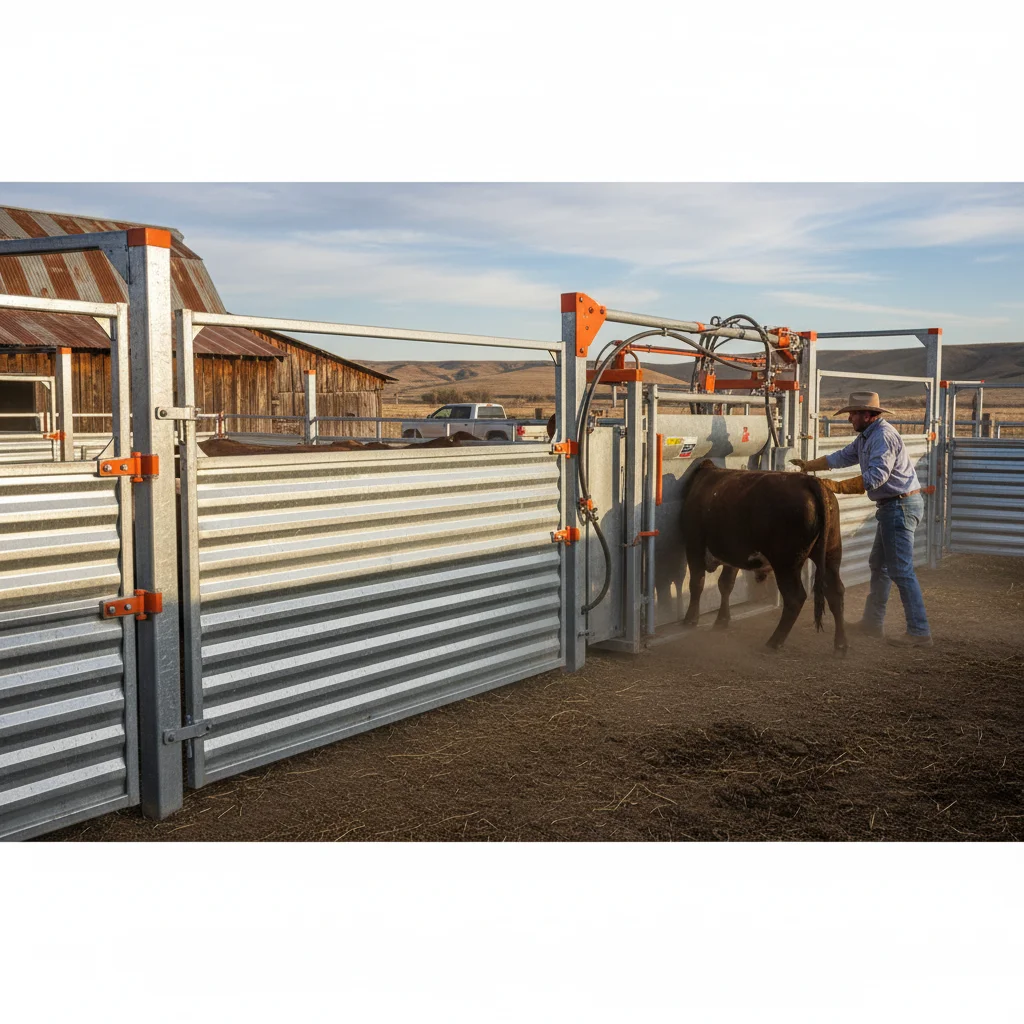
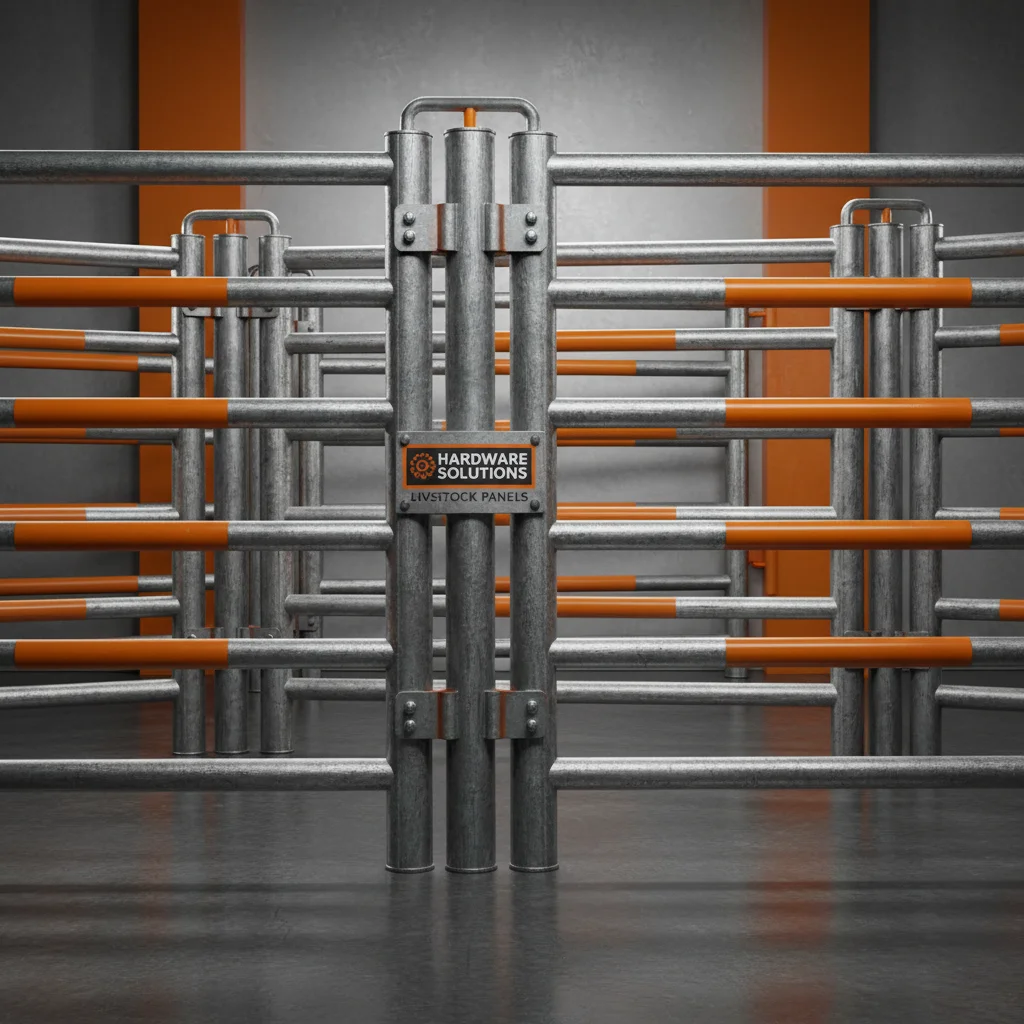
When managing high-density pedestrian traffic or organizing large-scale outdoor events, the selection of high-strength perimeter solutions is critical. While some users search for 16 foot livestock panels, it is essential to distinguish between agricultural fencing and professional crowd control barriers engineered for human safety and rapid urban deployment. Professional barriers provide the structural integrity needed to manage thousands of people while maintaining a professional aesthetic.
The global demand for efficient pedestrian management has surged, driven by the increase in international sporting events and public infrastructure projects. The challenge lies in finding a balance between extreme durability and the logistical ease of transportation. High-grade industrial steel barriers, featuring precision welding and advanced coatings, have become the gold standard for securing venues and organizing queues effectively.
Understanding the technical nuances—such as the difference between flat bases for shipping and V-feet for stability—allows venue managers to optimize their investment. By utilizing modular designs and corrosion-resistant finishes, organizations can ensure long-term operational reliability while significantly reducing the cost of maintenance and international freight.

Global Relevance of High-Strength Barrier Systems
In the modern era of mass gatherings, the ability to control human flow is not just a matter of convenience but a critical safety requirement. While traditional agricultural solutions like 16 foot livestock panels are designed for animal containment, professional crowd control barriers are engineered to withstand the dynamic pressures of thousands of pedestrians. This distinction is vital for compliance with international safety standards and ISO quality benchmarks.
Across the globe, from the Olympic Games to urban music festivals, the deployment of high-grade industrial steel barriers ensures that emergency exits remain clear and queues remain orderly. The integration of precision welding and hot-dipped galvanization allows these systems to be deployed in diverse climates, from humid coastal regions to freezing northern latitudes, without compromising structural integrity.
Defining Professional Crowd Control vs Livestock Panels
To the untrained eye, various metal fencing solutions might look similar, but the functional requirements differ wildly. A "livestock panel" is typically designed for static containment of animals, whereas professional crowd control barriers are designed for high-frequency relocation and human interaction. The latter focuses on removing sharp edges, ensuring stable footings, and providing a smooth finish to prevent injury to the public.
Professional barriers are categorized by their versatility. Unlike fixed agricultural fencing, these systems offer various configurations, such as flat bases for optimized shipping and V-feet for rapid on-site deployment. This modularity allows event organizers to scale their security perimeter based on the specific needs of the venue, whether it is a narrow city street or a wide open stadium.
From a material science perspective, these barriers utilize industrial-grade steel that is either pre-galvanized or galvanized after welding. This ensures that every joint is protected from oxidation, a common failure point in cheaper alternatives. This level of engineering ensures that the barrier remains a reliable asset for a decade or more, far exceeding the lifespan of standard temporary fencing.
Core Components of Industrial Grade Barriers
The effectiveness of a perimeter system depends on its technical parameters. For those accustomed to the dimensions of 16 foot livestock panels, the precision of professional barriers may be surprising. Panel sizes are typically optimized at 1100x2100mm, 1100x2200mm, or 1100x2500mm to balance height for security and weight for portability.
Durability is achieved through a wide range of frame diameters (from 20mm to 48mm) and infill picket options (12mm to 25mm). By adjusting the picket spacing—common options include 60mm, 100mm, 190mm, and 200mm—manufacturers can tailor the barrier to prevent people from climbing over or slipping through, providing a customized security level that far exceeds basic fencing.
The most critical component for long-term value is the coating process. Hot-dipped galvanizing creates a thick zinc layer that penetrates the steel, offering superior corrosion resistance. For venues requiring brand alignment, powder coating provides a smooth, colorful finish without sacrificing the underlying industrial-grade protection.
Practical Applications and Global Use Cases
These professional systems are deployed globally in high-stakes environments. In sporting events, they are used to create "buffer zones" between fans and athletes. In public infrastructure projects, they ensure pedestrian safety during construction. While agricultural settings might use 16 foot livestock panels, urban centers rely on these steel barriers for rapid deployment during parades or protests.
One of the most significant applications is in international logistics. By using flat-base barriers, shipping companies can maximize container loading density, drastically reducing the carbon footprint and cost of transporting security infrastructure across oceans. Once on site, the rapid transition to V-foot bases allows for immediate installation without the need for complex tools.
Efficiency Comparison of Perimeter Systems
Long-Term Value and Investment Returns
Investing in premium barriers yields a significant return over time when compared to lower-grade alternatives. While the initial cost of hot-dipped galvanized steel may be higher than basic 16 foot livestock panels, the lifespan extends from a mere 3-5 years to over 10 years. This reduces the frequency of replacement and the associated labor costs.
Furthermore, the use of removable bases is a strategic financial decision. Instead of replacing an entire barrier panel when a foot becomes damaged or worn, operators can simply replace the base component. This "modular maintenance" approach ensures that the primary structural asset remains in service, drastically lowering the total cost of ownership.
Future Trends in Perimeter Security Technology
The industry is moving toward "smarter" and "greener" perimeter solutions. We are seeing an increase in the use of recycled industrial steel and low-VOC powder coatings to meet stringent environmental regulations. The goal is to provide the same structural integrity as traditional steel while reducing the overall carbon footprint of the manufacturing process.
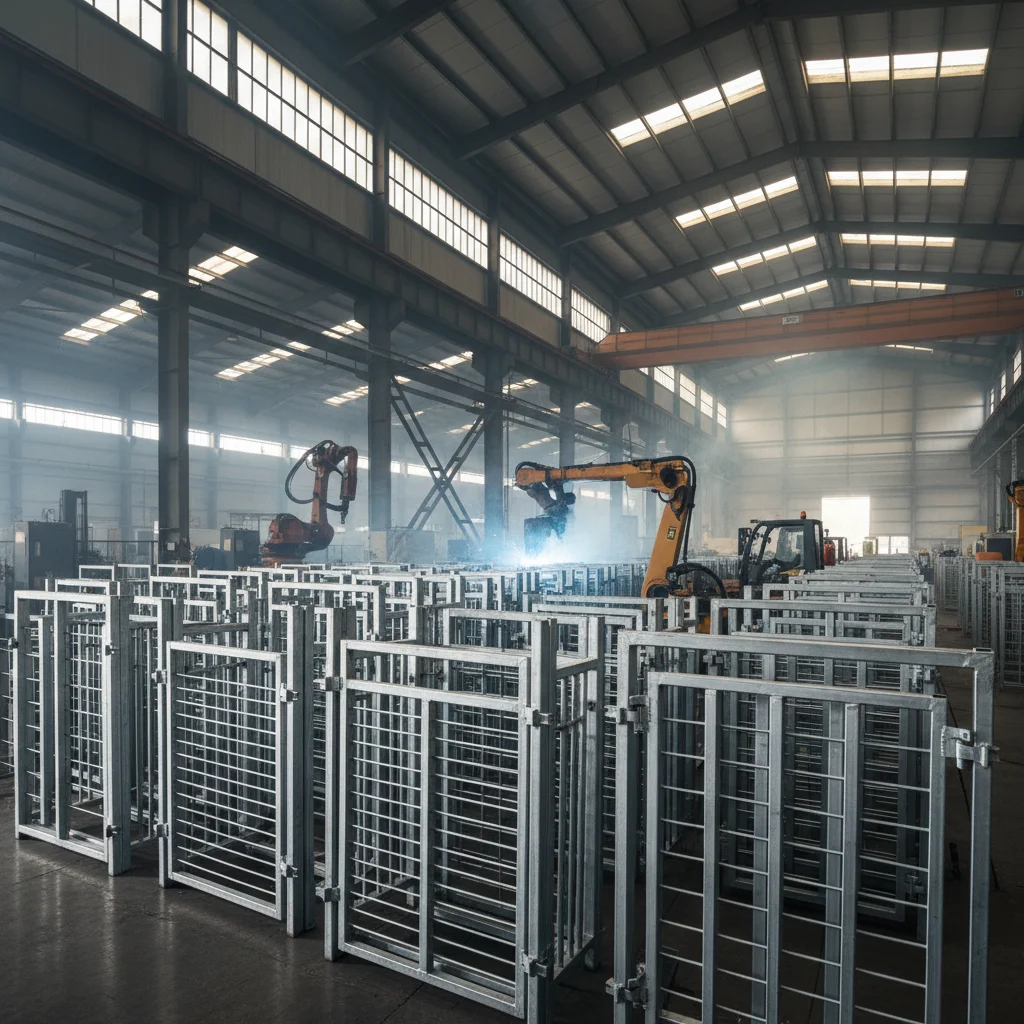
Automation is also playing a role in quality assurance. Advanced robotic welding and laser-guided coating thickness inspections ensure that every barrier produced meets international standards. This eliminates the "weak points" often found in manually welded products, ensuring consistent performance across large batch orders of thousands of units.
Additionally, the integration of modular connectivity is evolving. Future barriers are being designed for even faster "click-and-lock" mechanisms, further reducing the time required for deployment. This evolution ensures that security teams can react to changing crowd dynamics in real-time without compromising safety.
Overcoming Deployment Challenges
One of the primary challenges in venue management is the "last mile" of deployment. Heavy barriers can be difficult to move quickly across uneven terrain. The solution lies in the adoption of V-foot designs, which provide immediate stability and can be slid into place rapidly, unlike traditional panels that may require leveling or digging.
Another common issue is corrosion at the weld joints. Many manufacturers use pre-galvanized tubes, but the heat from welding destroys the zinc coating at the joint. Our solution is "galvanizing after welding," where the entire finished assembly is dipped in zinc, sealing every joint and preventing the rust that typically causes barriers to fail prematurely.
Finally, the challenge of international shipping costs is solved through optimized layouts. By designing barriers with flat bases that nest into one another, we can maximize container utilization, allowing clients to import more units per shipment and lower their per-unit landed cost.
Comparison of Barrier Specifications and Lifecycle Value
| Barrier Feature |
Standard Panel |
Premium Barrier |
Impact on ROI |
| Expected Lifespan |
3-5 Years |
10+ Years |
High - Lower replacement cost |
| Shipping Density |
Low (Fixed) |
High (Flat Base) |
Medium - Reduced freight cost |
| Joint Protection |
Pre-Galvanized |
Post-Weld Galv |
High - No joint oxidation |
| Deployment Speed |
Moderate |
Rapid (V-Foot) |
Medium - Lower labor cost |
| Maintenance |
Full Replacement |
Replaceable Bases |
High - Low repair expense |
| Customization |
Limited |
Full Spec Range |
Medium - Precise security fit |
FAQS
Flat base barriers are primarily designed for logistical efficiency, allowing them to be stacked tightly in shipping containers to reduce costs. V-foot barriers are engineered for on-site stability and rapid deployment, providing a wider footprint that prevents tipping in high-traffic crowd environments.
Hot-dipped galvanizing is the superior choice for long-term outdoor use due to its deep-penetrating zinc layer that resists corrosion. Powder coating is ideal for venues that require a specific brand color or a smooth, aesthetic finish for high-profile corporate events.
Yes, we specialize in custom manufacturing. We can adjust panel height, width, frame diameter, and picket spacing to meet your specific security requirements, ensuring a perfect fit for your unique venue layout.
We offer both fixed and removable foot options. We highly recommend removable feet for clients who ship products internationally or those who want to lower long-term maintenance costs by replacing only the feet rather than the whole panel.
Galvanizing after welding ensures that the heat-affected zones at the weld joints are fully coated in zinc. In pre-galvanized products, these joints are left exposed and are usually the first place rust begins, leading to premature structural failure.
Temporary fence panels are generally used for long-term perimeter security of construction sites. Crowd control barriers are specifically designed for managing high-density pedestrian flow and are optimized for frequent relocation within a venue.
Conclusion
Professional crowd control barriers represent a critical investment in safety and operational efficiency. By focusing on industrial-grade materials, post-weld galvanization, and modular base designs, these systems offer a level of durability and logistical flexibility that far exceeds basic solutions like 16 foot livestock panels. The ability to customize every parameter—from picket spacing to frame diameter—ensures that any venue, regardless of size or traffic density, can be managed securely and professionally.
As urban event management becomes more complex, the shift toward high-lifespan, low-maintenance perimeter solutions is inevitable. We recommend that venue managers and security professionals prioritize hot-dipped galvanized options and removable bases to maximize their return on investment and ensure the highest standards of public safety. For more information on professional perimeter solutions, visit our website: www.haotianmesh.com.