


The Unsung Hero: Why Welded Mesh Fencing Rules the Roost
You know, in my years knocking around the fencing industry, I've seen countless trends come and go. But one constant, a true workhorse if you ask me, is the welded wire mesh fence. It's everywhere, really, from keeping our backyards safe to securing high-stakes industrial compounds. And honestly, for good reason. It offers an incredible blend of security, durability, and surprising versatility that many other options just can't match.
What Makes It Tick? The Nitty-Gritty Details
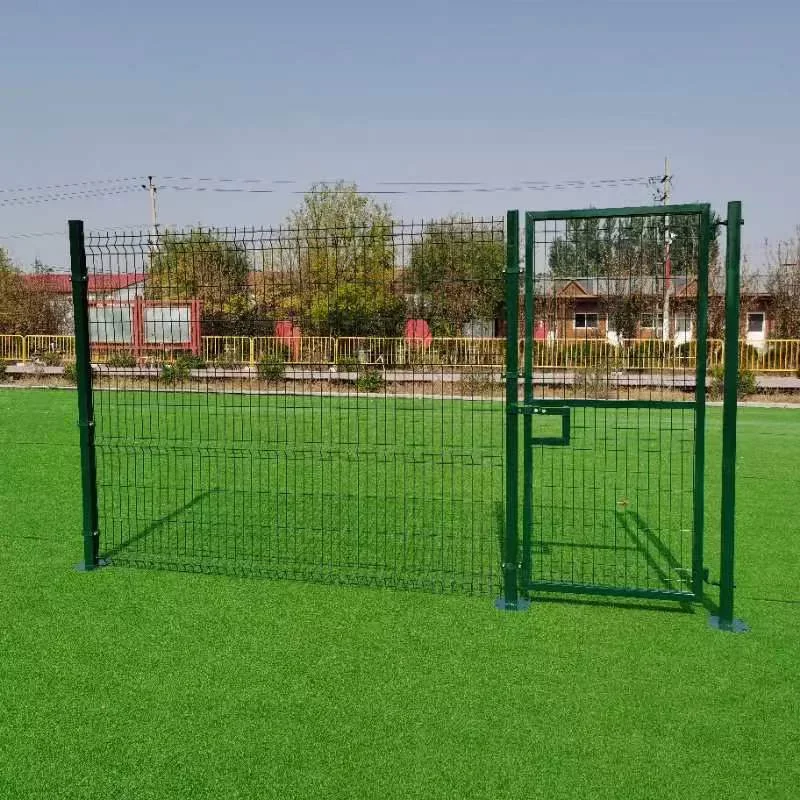
So, what exactly are we talking about when we say welded wire mesh fence? Picture this: a series of robust drawn steel wires, meticulously welded at every single intersection. This isn't just a haphazard weave; that precise welding is the secret sauce, giving the panels their incredible rigidity and strength. In fact, it's what differentiates it from, say, a chain link fence, which relies more on interlocking.
Panel dimensions are pretty standard across the board, typically coming in widths of 2.5m, 2.75m, or even 3m. But here's a neat trick: they can be cut to practically any size you need, making customization a breeze. Wire thickness? That's crucial for security, and it usually ranges between 3.5mm for more general applications up to a beefy 8mm for those heavy-duty, high-security requirements. I've heard customers call the thicker ones "practically impenetrable," and I wouldn't disagree!
The Lifeline: Coating and Durability
Durability, naturally, is key. Nobody wants a fence that rusts out in a year. This is where coatings come into play. We're talking about options like powder-coating or PVC-coating, which not only protect the steel but also offer a wide palette of colors – RAL 6005, a lovely moss green, is surprisingly popular for blending into natural surroundings. For maximum longevity, zinc-coating is often applied, sometimes reaching an impressive 500g per square meter. That's serious corrosion protection, designed to withstand the elements for decades.
Behind the Scenes: The Manufacturing Journey
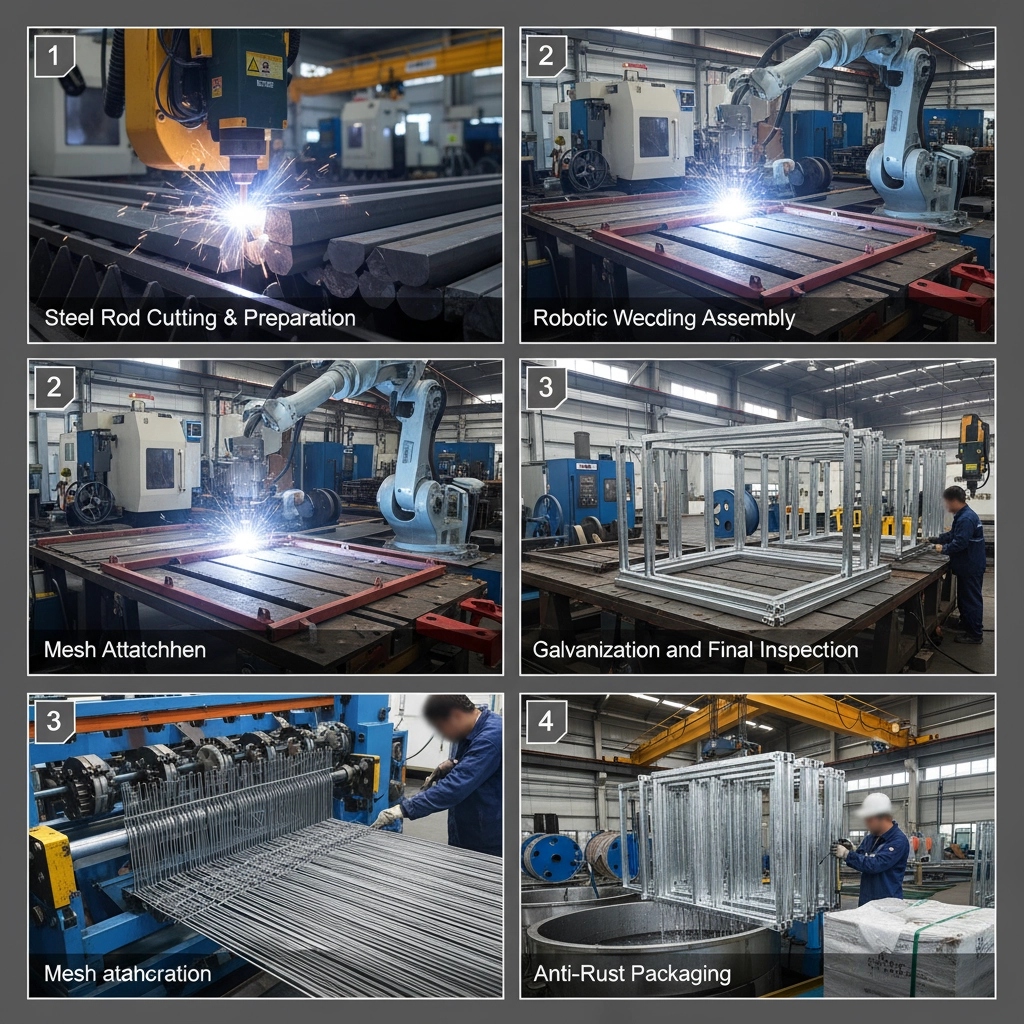
The process is more involved than you might think. It starts with sourcing high-quality drawn steel wires. These wires are then precisely aligned and, using advanced resistance welding techniques, joined at every intersection. Think of it as a meticulously engineered grid. After welding, the panels undergo a thorough cleaning process before the protective coatings are applied. This could be hot-dip galvanizing for that heavy zinc layer, followed by powder or PVC coating. Each step is usually subject to stringent quality checks, often adhering to international standards like ISO 9001, to ensure the finished product meets expected performance benchmarks for strength, corrosion resistance, and overall service life.
Where You'll See It: Common Applications
Honestly, the application scenarios are vast. I’ve seen welded wire mesh fence used in everything from:
· Residential perimeters and garden enclosures (it offers great visibility).
· Commercial properties and office parks.
· Industrial sites, factories, and warehouses (for secure zones).
· Public parks and recreational areas.
· Even agricultural uses, like animal enclosures.
Its robust nature means it's often preferred for security fencing where deterrence and clear visibility are crucial, allowing surveillance systems to function effectively.
Typical Product Specifications
Feature | Specification |
Panel Widths | 2.5m, 2.75m, 3m (customizable) |
Wire Thickness | 3.5mm to 8mm |
Coating Options | Powder-coating, PVC-coating, Zinc-coating |
Zinc-Coating Level | Up to 500g/m² |
Standard Colors | RAL 6005 (Moss Green), custom colors available |
Service Life | 15-25 years (real-world use may vary) |
Navigating the Market: Choosing the Right Welded Mesh Fencing Suppliers
This brings us to an important point: finding reliable welded mesh fencing suppliers. It's not just about the price tag, trust me. Quality, customization capabilities, and after-sales support can make or break a project. I've seen some suppliers cut corners on wire gauge or coating thickness, and that always comes back to haunt you.
Many customers say they prioritize suppliers who offer good flexibility in panel dimensions and coating options, particularly for large or unique projects. For instance, being able to cut panels to specific sizes, not just standard widths, can save a lot of hassle and waste on-site. And don't forget about packaging; a well-packed shipment prevents damage during transit, which, let's be honest, is a common headache.
Vendor Comparison Snapshot (Hypothetical)
Feature | Supplier A | Supplier B |
Wire Thickness Range | 3.5mm - 6mm | 3.5mm - 8mm |
Max Zinc-Coating | 300g/m² | 500g/m² |
Custom Panel Sizes | Limited to standard widths | Fully customizable |
Certifications | ISO 9001 | ISO 9001, CE |
Lead Time (Avg.) | 3-4 weeks | 2-3 weeks |
The Verdict: A Smart Choice
In conclusion, the welded wire mesh fence isn't just a basic barrier; it's an engineered security solution that has evolved over time. Its blend of strength, versatility, and cost-effectiveness makes it a go-to for countless applications. Whether you're securing a private garden or a sprawling industrial complex, understanding its technical underpinnings and knowing what to look for in a supplier will ensure you get a fence that truly stands the test of time. It really is an unsung hero of our modern landscape, if you ask me.
Authoritative Citations:
1. ASTM International. "Standard Specifications for Steel Wire Barbed Tape." (General standard for fencing materials, applicable to wire quality).
2. ISO 9001:2015. "Quality management systems — Requirements." (Standard often met by reputable manufacturers).
3. Fencing Manufacturers Institute. "Guide to Perimeter Security Fencing." (Industry body providing best practices).
-
Durable Mini Livestock Panels for Efficient Animal Management In the modern agricultural landscape, the demand for flexible and efficient animal containment has led to the widespread adoption of mini livestock panels. These specialized fencing solutions provide farmers and ranchers with a versatile way to manage small-to-medium sized animals, offering a perfect balance between structural integrity and ease of movement. Whether used for temporary sorting, kidding pens, or rotational grazing, these panels are essential for maintaining herd health and operational efficiency. Globally, the livestock industry is shifting toward precision farming, where the ability to quickly isolate animals for veterinary care or nutritional management is paramount. Read More >26 May, 22
-
Durable Metal Livestock Panels for Modern Farming Systems Effective livestock management relies heavily on the quality of containment systems, and metal livestock panels have emerged as the gold standard for modern farming. These robust barriers are designed to balance security with animal welfare, ensuring that cattle, sheep, and pigs are contained safely while reducing the stress associated with restrictive environments. By integrating high-tensile steel and corrosion-resistant coatings, these panels provide a long-term solution to the perennial challenges of livestock containment. Globally, the shift toward industrialization in agriculture has necessitated a transition from traditional wooden fencing to more durable alternatives. Read More >26 May, 20
-
High Quality livestock windbreak panels for Animal Welfare In the demanding environment of modern animal husbandry, protecting livestock from harsh climatic conditions is not just a matter of comfort, but a critical factor in animal welfare and productivity. High-velocity winds can lead to significant heat loss in winter and excessive stress in summer, directly impacting growth rates and immunity. Implementing high-quality livestock windbreak panels provides a strategic barrier that stabilizes the microclimate within enclosures, ensuring that animals remain healthy regardless of external weather fluctuations. Across the globe, from the vast plains of North America to the intensive farming hubs in Europe and Asia, the adoption of engineered windbreaks has become a standard Read More >26 May, 18
-
Industrial Grade Livestock Windbreak Panels Industrial Grade Livestock Windbreak Panels Engineered for maximum durability and optimal air filtration, protecting your livestock from extreme weather conditions with precision-woven metal mesh technology. 500k Annual Output sqm 120 Countries Served 7 Days Sample Lead Time 99.9 On-Time Delivery Advanced Wind Protection Engineering Excellence Setting the gold standard in livestock shelter ventilation and wind mitigation systems. As a pioneer in metal wire mesh manufacturing, our livestock windbreak panels occupy a leading position in the global agricultural sector. We combine high-tensile galvanized steel with precision weaving to ensure that every panel provides unmatched structural stability. Read More >26 May, 15
If you are interested in our products, you can choose to leave your information here, and we will be in touch with you shortly.


