


Selecting the right perimeter security system often comes down to a critical trade-off between initial procurement costs and long-term structural integrity. In industrial and agricultural sectors, the demand for high-strength containment has shifted away from traditional woven options toward rigid, precision-engineered solutions that minimize maintenance.
The shift toward wholesale welded wire fencing is driven by the need for modularity and consistent aperture sizes, which are essential for everything from livestock management to high-security construction site boundaries. When sourced at scale, these systems provide a predictable cost-per-linear-foot while ensuring that the physical barrier remains taut and resistant to deformation over decades.
This analysis examines the technical specifications, material science, and procurement logic required to deploy industrial-grade welded mesh that balances aesthetic professionalism with rigorous engineering standards.

The Evolution of Rigid Mesh Systems

Historically, wire fencing relied on weaving or twisting, which often resulted in "sagging" over time and inconsistent opening sizes. The transition to 3D welded wire mesh represents a fundamental change in how structural boundaries are conceived, moving from a flexible fabric model to a rigid panel system.
Modern manufacturing, such as the precision welding technology employed by Anping Haotian Hardware Wire Mesh Products Co., Ltd., allows for the creation of panels that maintain a perfectly flat surface. This structural rigidity is not merely aesthetic; it prevents the mesh from warping under external pressure, making it far more effective for security and containment.
Material Engineering and Weld Integrity
The strength of a welded fence is determined by the synergy between the base wire material and the quality of the weld point. Most industrial systems utilize mild steel for cost-efficiency and structural mass, while stainless steel is reserved for environments where chemical resistance and hygiene are non-negotiable, such as food processing plants.
Wire gauge (BWG) selection is the primary lever for controlling the panel's load-bearing capacity. Ranging from BWG 12 for heavy-duty industrial reinforcement to BWG 24 for lighter boundaries, the gauge must be matched to the expected physical stress of the environment. A mismatch here often leads to premature failure at the weld joints, where stress concentration is highest.
Precision welding ensures that every intersection is fused without compromising the metallurgical properties of the wire. This consistency prevents "weak links" in the fence, ensuring that the entire perimeter maintains a uniform resistance level against impacts or attempted breaches.
Corrosion Protection Strategies
In outdoor deployments, the primary enemy of welded mesh is oxidation. The choice of surface treatment determines whether a fence lasts three years or twenty. The industry standard has evolved from simple coatings to complex galvanization processes that bond zinc to the steel at a molecular level.
Hot-dip galvanizing offers a significantly thicker zinc layer compared to electrogalvanizing, making it the essential choice for harsh weather or coastal environments where salt spray accelerates corrosion.
For specialized needs, powder-coated spraying is applied over the galvanization. This provides a secondary barrier and allows for color-coding, which is often required for temporary fence panels used in construction sites to denote specific security zones or brand identification.
Performance Index by Application
Different sectors prioritize different performance metrics. For example, agricultural livestock panels require high tensile strength to prevent animal breakthroughs, while concrete reinforcement mesh prioritizes bonding capability and rigidity to prevent structural cracking.
Evaluating a product based on a "value index" helps buyers understand where to invest. A high-performance 3D mesh may have a higher upfront cost but significantly lowers the Total Cost of Ownership (TCO) by extending the replacement cycle from 5 years to 20 years.
Figure 2. Relative Performance Index of Welded Mesh Types
Deployment Scenarios and Limitations
In a typical industrial setting, such as a food processing facility, stainless steel welded mesh is deployed to ensure that the facility meets strict sanitary codes. Here, the limitation is not structural strength but the ability of the material to withstand caustic chemical cleaning agents without pitting or rusting.
Conversely, for temporary security fencing on large-scale construction sites, the priority is rapid deployment and modularity. These systems must be easy to assemble and disassemble without compromising the perimeter's stability. The limitation in these scenarios is often logistics; hence, strategic packaging to prevent panel deformation during transit is as critical as the product itself.
Future Shifts in Industrial Fencing
The industry is moving toward "intelligent procurement," where buyers no longer select fences based on price alone but on Lifecycle Assessment (LCA). This involves calculating the energy and cost of replacement over 20 years versus the initial investment in premium materials.
We are also seeing a rise in demand for specialized hybrid mesh, such as the black mesh panels optimized specifically for concrete reinforcement. These products are engineered to provide the exact tensile strength required to prevent concrete cracking, blending the roles of a boundary fence and a structural component.
Automation in production—including real-time inventory tracking and automated welding lines—is reducing the variance in mesh opening tolerances. This means that for bulk buyers, the risk of receiving inconsistent batches is decreasing, allowing for more precise architectural planning.
Selection Framework for Bulk Procurement
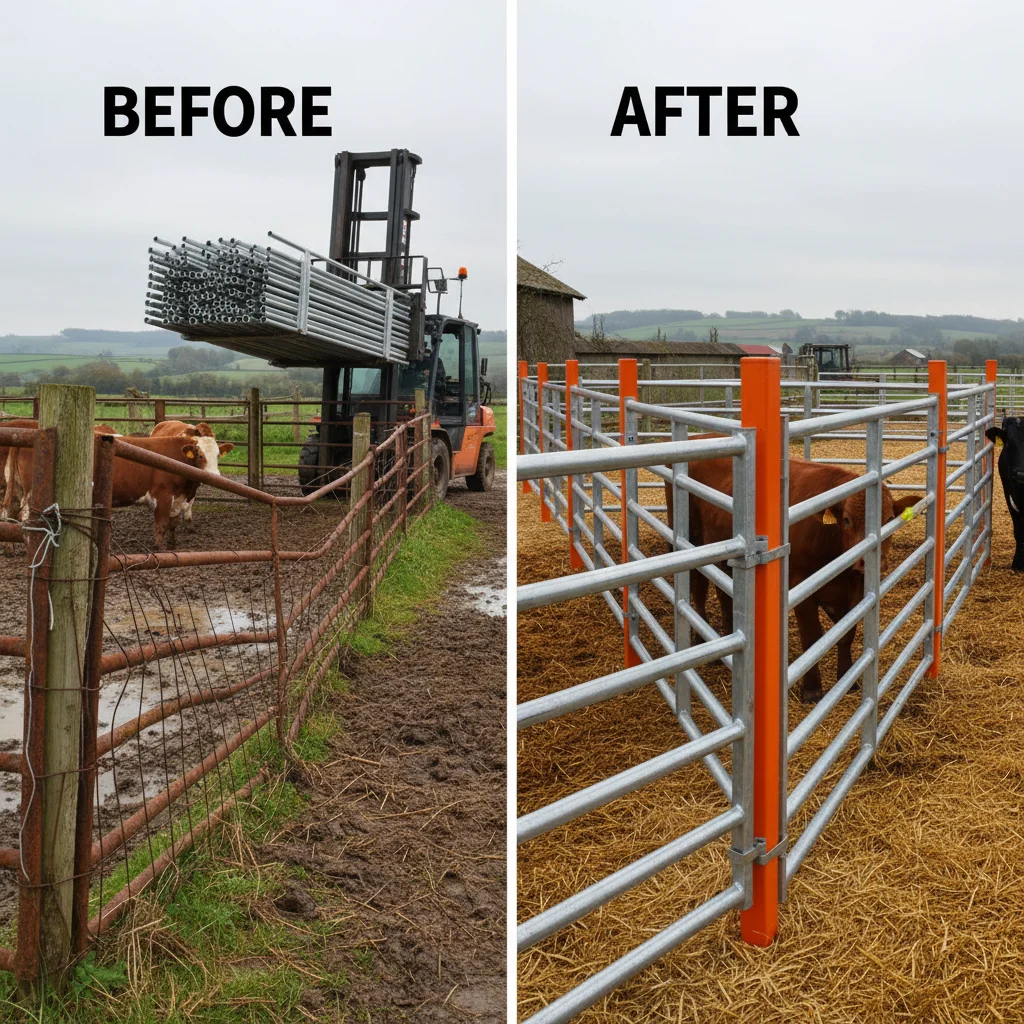
When sourcing wholesale welded wire fencing, the decision framework should be based on the specific environmental stressor of the site. A fence meant for a livestock corral has entirely different requirements than one designed for a high-security industrial boundary.
Buyers must analyze the trade-off between installation speed and longevity. Modular panels allow for rapid setup, reducing labor expenses, but require a higher initial material investment compared to manual wire installation.
The following comparison framework illustrates how to evaluate different welded mesh options based on the expected operational environment and required asset lifespan.
| Environment Type | Recommended Material | Critical Treatment | Expected Lifespan |
|---|---|---|---|
| Coastal / High Humidity | Mild Steel / SS | Hot-dip Galvanized | 15-20 Years |
| Food Processing | Stainless Steel | Electropolishing | 20+ Years |
| Temporary Site | Mild Steel | Electrogalvanized + Spray | 2-5 Years |
| Concrete Reinforce | Black Annealed Wire | Specialized Coating | Project Life |
| Livestock Containment | Mild Steel | Hot-dip Galvanized | 10-15 Years |
| Indoor Commercial | Mild Steel | Powder Coated | 10+ Years |
Questions & Answers
Hot-dip galvanizing involves immersing the wire in molten zinc, creating a thick, metallurgical bond that provides superior corrosion resistance for outdoor and harsh environments. Electrogalvanizing uses an electrical current to apply a thinner zinc layer, resulting in a smoother, more aesthetic finish that is better suited for indoor applications or mild weather conditions where extreme rust protection is not the primary requirement.
Yes, specifically engineered black mesh panels are designed for this purpose. Unlike standard fencing, reinforcement mesh focuses on tensile strength and the ability to bond with concrete to prevent structural cracking. These panels provide the necessary internal skeleton for slabs and walls, ensuring the structural integrity of the concrete across industrial flooring and foundation projects.
Stainless steel is the highly recommended material for food-grade environments. Its inherent resistance to oxidation and its ability to withstand aggressive chemical cleaning agents make it the only viable choice for maintaining hygiene standards. Mild steel, even when galvanized, is susceptible to pitting over time when exposed to the high-salinity or acidic environments common in food processing.
Customization is based on the specific size, strength, and behavior of the animal being contained. Openings can range from 1/4" for small animals to 4" for larger livestock. The goal is to ensure the aperture is small enough to prevent escape or injury (by preventing limbs from getting caught) while remaining structurally sound enough to resist the physical pressure exerted by the livestock.
Flatness is ensured through the use of high-precision automated welding machines paired with specialized tensioning frames. By maintaining constant tension on the wires during the welding process and utilizing cooling cycles that prevent thermal warping, manufacturers can ensure that every panel is perfectly flat and free of the twisting common in lower-grade manual production.
Yes, by using a powder-coated spray finish applied after the galvanization process. The galvanization provides the primary corrosion barrier, while the powder coating adds an additional environmental layer and a specific professional aesthetic. This dual-layer approach ensures that the fence remains protected against rust while meeting the visual requirements of commercial or residential boundaries.
Final Thoughts
The transition from basic wire mesh to precision-welded systems reflects a broader industrial trend toward durability and reduced operational overhead. By prioritizing material grade, weld integrity, and appropriate surface treatments, organizations can secure their assets with a system that minimizes replacement costs and maximizes security.
Ultimately, the value of wholesale welded wire fencing lies in its predictability. When technical parameters like BWG standards and galvanizing thickness are strictly adhered to, the result is a high-performance boundary that serves as a long-term asset rather than a recurring maintenance liability.



Daniel Wilson
If you are interested in our products, you can choose to leave your information here, and we will be in touch with you shortly.


