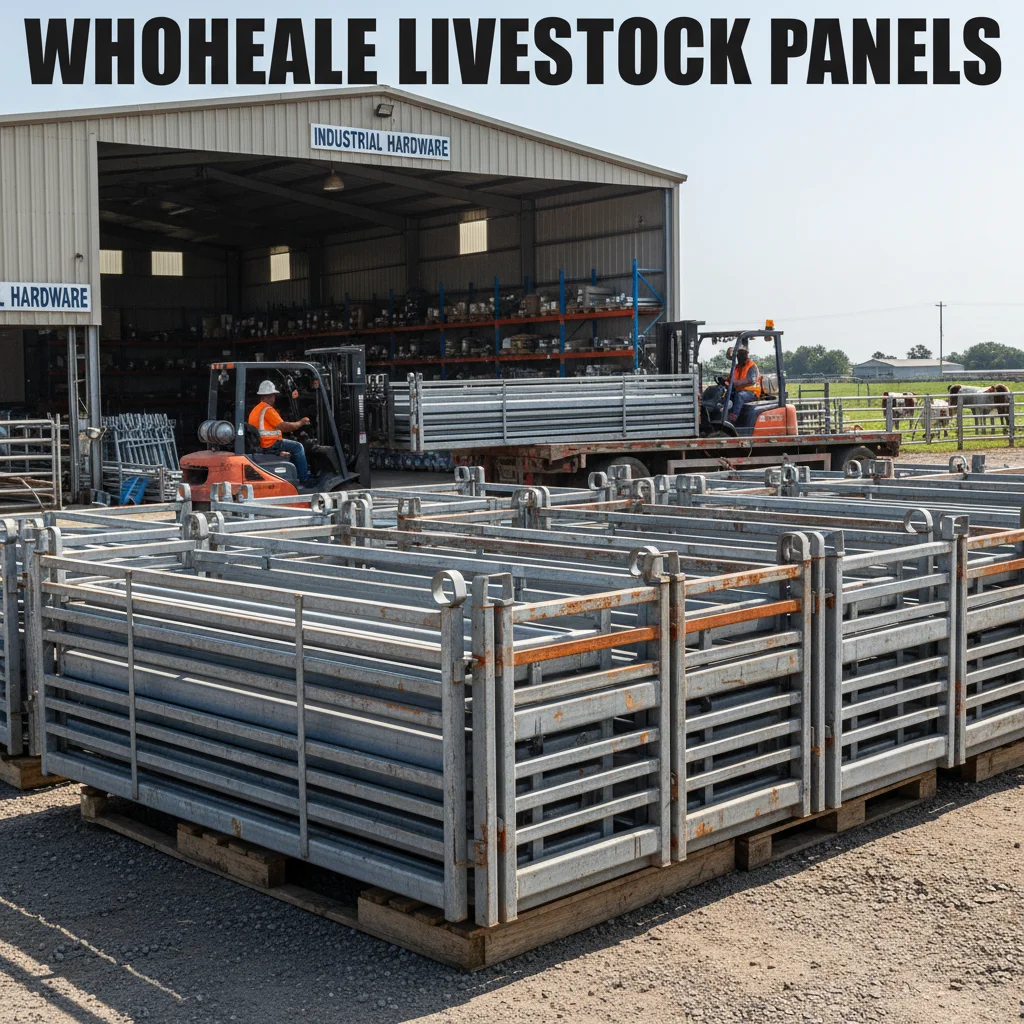
In the modern industrial landscape, the demand for robust containment and security solutions has led to the widespread adoption of high-performance fencing systems. Among these, stock fence panels have emerged as a critical component for managing large-scale agricultural zones and industrial boundaries, providing a reliable barrier that balances strength with cost-efficiency. Understanding the engineering behind these panels is essential for stakeholders looking to maximize the lifespan of their perimeter investments.
Globally, the shift toward precision-engineered materials has transformed how we approach livestock management and site security. The integration of high-grade iron and stainless steel ensures that these systems can withstand extreme environmental pressures, from coastal salinity to industrial chemical exposure. By focusing on structural rigidity and corrosion resistance, modern manufacturing has turned a simple boundary tool into a long-term industrial asset.
Whether utilized for livestock containment or as a temporary security measure, the selection of stock fence panels depends heavily on the specific material grades and surface treatments employed. By leveraging advanced welding technology and galvanizing processes, these panels offer a sophisticated solution for infrastructure needs in construction, food processing, and agriculture.

Engineering and Material Composition of Stock Fence Panels
The fundamental strength of premium stock fence panels lies in their core material selection. By utilizing a combination of high-grade mild steel and stainless steel wire, these panels are engineered to provide a rigid, heavy-duty structure that resists deformation under pressure. This material duality allows users to choose between the cost-effectiveness of mild steel for standard boundaries and the superior chemical resistance of stainless steel for specialized industrial environments.
Furthermore, the use of BWG 12 to BWG 24 wire gauges ensures that the mesh is tailored to the specific load-bearing requirements of the project. This precision in gauge selection prevents the common failure points found in lower-grade fencing, making these panels an ideal choice for high-stress livestock containment and critical infrastructure reinforcement.
Corrosion Protection and Surface Treatment Standards
One of the primary challenges in maintaining exterior boundaries is the constant threat of oxidation and rust. To combat this, premium stock fence panels undergo rigorous surface treatment processes, including hot-dip galvanizing and electrogalvanizing. Hot-dip galvanizing creates a thick, durable zinc layer that acts as a sacrificial anode, protecting the underlying steel from harsh weather and corrosive elements for decades.
For indoor applications or environments where a smoother, more aesthetic finish is required, electrogalvanizing provides a precise coating that maintains the sleek appearance of the wire without compromising basic protection. Additionally, the option for powder-coated spraying allows for customized colors and an added layer of environmental shielding, ensuring the panels blend seamlessly into commercial or residential landscapes.
In highly specialized sectors like the food industry, the reliance on stainless steel removes the need for galvanizing altogether, as the material's inherent chromium content forms a self-healing oxide layer. This ensures that the panels meet strict hygiene standards and can withstand frequent chemical cleaning agents without degrading over time.
Precision Engineering and Structural Integrity
The structural reliability of stock fence panels is achieved through advanced precision welded mesh technology. Unlike traditional woven wire, which can sag or shift over time, welded mesh utilizes high-pressure bonds at every intersection. This creates a rigid 3D structure that maintains its shape and tension even when subjected to external force from livestock or wind loads.
To ensure a perfectly flat surface, specialized tensioning frames and automated welding lines are employed during production. This precision prevents warping and ensures that every opening—ranging from 1/4" to 4"—is consistent across the entire panel. Such uniformity is critical for applications where exact gaps are required for security or specific animal containment needs.
Moreover, the development of specialized black mesh panels represents a breakthrough in structural integrity for the construction sector. These panels are specifically optimized for concrete reinforcement, providing the necessary tensile strength and bonding capability to prevent cracking in industrial slabs and walls, effectively merging the function of a fence with that of a structural support.
Comparative Performance in Industrial Applications
When evaluating the effectiveness of different fencing solutions, the transition from standard wire mesh to premium 3D welded stock fence panels reveals a significant leap in performance. While basic mesh often requires frequent maintenance and suffers from a shorter lifespan, industrial-grade welded panels are designed for longevity, drastically reducing the total cost of ownership through lower replacement frequencies.
From an operational perspective, the modular design of these panels enables rapid installation, which reduces labor expenses and site downtime. This efficiency is particularly valuable in temporary security projects where speed of deployment is as critical as the strength of the barrier itself.
Performance Comparison of Stock Fence Panels Systems
Versatile Global Use Cases and Adaptability
The adaptability of stock fence panels makes them indispensable across various global industries. In large-scale agricultural operations, they serve as secure livestock panels that prevent animal escape while resisting the physical impact of livestock. In the food processing industry, stainless steel variants provide a hygienic, non-reactive barrier that complies with international health and safety standards.
Beyond permanent installations, these panels are frequently utilized as temporary fence panels for construction sites and event management. Their ability to be rapidly deployed and dismantled without losing structural rigidity makes them a preferred choice for securing high-traffic areas or protecting critical infrastructure during phased building projects.
Long-Term Economic Value and Investment Return
Investing in premium welded mesh is a strategic financial decision based on the reduction of operational expenditures. While the initial cost of high-grade stock fence panels may be higher than basic options, the extended service life—often spanning 10 to 20 years compared to 2-5 years for standard mesh—significantly lowers the frequency of replacement and the associated labor costs.
Moreover, the increased structural stability reduces the risk of containment failure, which in agricultural contexts can prevent costly livestock loss. In industrial settings, the use of reinforced panels for concrete work ensures the longevity of the building's foundation, preventing expensive structural repairs in the future.
The professional aesthetic of a flat, precision-welded surface also adds tangible value to commercial properties. A clean, secure perimeter projects an image of reliability and professionalism, which is an intangible but critical asset for businesses operating in the public eye.
Future Innovations in Welded Mesh Technology
The future of stock fence panels is being shaped by the integration of automation and sustainable material science. The adoption of AI-driven quality assurance systems now allows manufacturers to monitor weld strength and galvanizing thickness in real-time, ensuring that every panel meets stringent international standards before leaving the factory.
Sustainability is also becoming a core focus, with an increasing shift toward recyclable steel and eco-friendly coating processes. The development of "smart" coatings that can signal corrosion before it becomes structural is an emerging trend that will further extend the maintenance cycles of industrial fencing.
As digital transformation hits the manufacturing floor, custom order tracking and precision production are enabling hyper-customized solutions. This means that panels can be engineered to exact metric or imperial dimensions with zero tolerance for error, allowing for a perfect fit in complex architectural projects.
Comparison of Industrial Fence Panel Specifications and Value
|
Panel Type
|
Expected Lifespan
|
Primary Application
|
Cost-Efficiency Score
|
| Standard Mild Steel |
3-5 Years |
Temporary Boundaries |
5/10 |
| Hot-Dip Galvanized |
15-20 Years |
Agricultural/Outdoor |
9/10 |
| Stainless Steel 304/316 |
25+ Years |
Food/Chemical Plants |
8/10 |
| Black Reinforcement Mesh |
Lifetime (Embedded) |
Concrete Structure |
10/10 |
| Electrogalvanized Sleek |
7-10 Years |
Indoor/Residential |
7/10 |
| Powder Coated Hybrid |
12-15 Years |
Commercial Facades |
8/10 |
FAQS
Hot-dip galvanizing involves submerging the wire in molten zinc, creating a thick, rugged layer ideal for harsh outdoor environments and long-term corrosion resistance. Electrogalvanizing uses an electrical current to apply a thinner, smoother zinc layer, which is more aesthetically pleasing and suitable for indoor or mild weather conditions where extreme protection is not the primary requirement.
Yes, our specialized black mesh panels are specifically engineered for concrete reinforcement. They provide the necessary tensile strength and structural bonding capability to prevent cracking and warping in industrial concrete slabs, making them a vital component for high-load construction projects.
Stainless steel is highly recommended for food-grade environments. Unlike mild steel, stainless steel is non-reactive and offers superior resistance to the chemical cleaning agents used in food processing plants, ensuring a hygienic environment that meets strict regulatory standards.
Absolutely. We provide a wide array of customization options, with opening sizes ranging from 1/4" up to 4". This flexibility ensures that your livestock panels are perfectly suited to the safety and containment requirements of specific animal sizes and behaviors.
We utilize high-precision automated welding machinery combined with specialized tensioning frames. This process ensures that every weld point is secure and that the entire panel remains perfectly flat and free of warping, which is essential for both structural stability and professional aesthetics.
Yes, we offer powder-coated spray finishes that can be applied after the welding or galvanizing process. This not only allows you to choose specific colors to match your branding or environment but also provides an additional layer of protection against environmental wear and tear.
Conclusion
In summary, premium stock fence panels represent the intersection of advanced material science and precision engineering. By combining high-grade steel alloys with superior galvanizing and welding technologies, these systems provide unmatched durability, corrosion resistance, and structural stability. From the critical reinforcement of industrial concrete to the secure management of agricultural livestock, the long-term value of these panels is evident in their reduced maintenance needs and extended operational lifespan.
As the industry moves toward smarter, more sustainable manufacturing, the role of precision-welded mesh will only grow in importance. For businesses and landowners seeking to secure their assets with a solution that balances immediate performance with long-term investment return, choosing industrial-grade welded panels is the most reliable path forward. To explore our full range of high-performance fencing solutions, visit our website: www.haotianmesh.com.