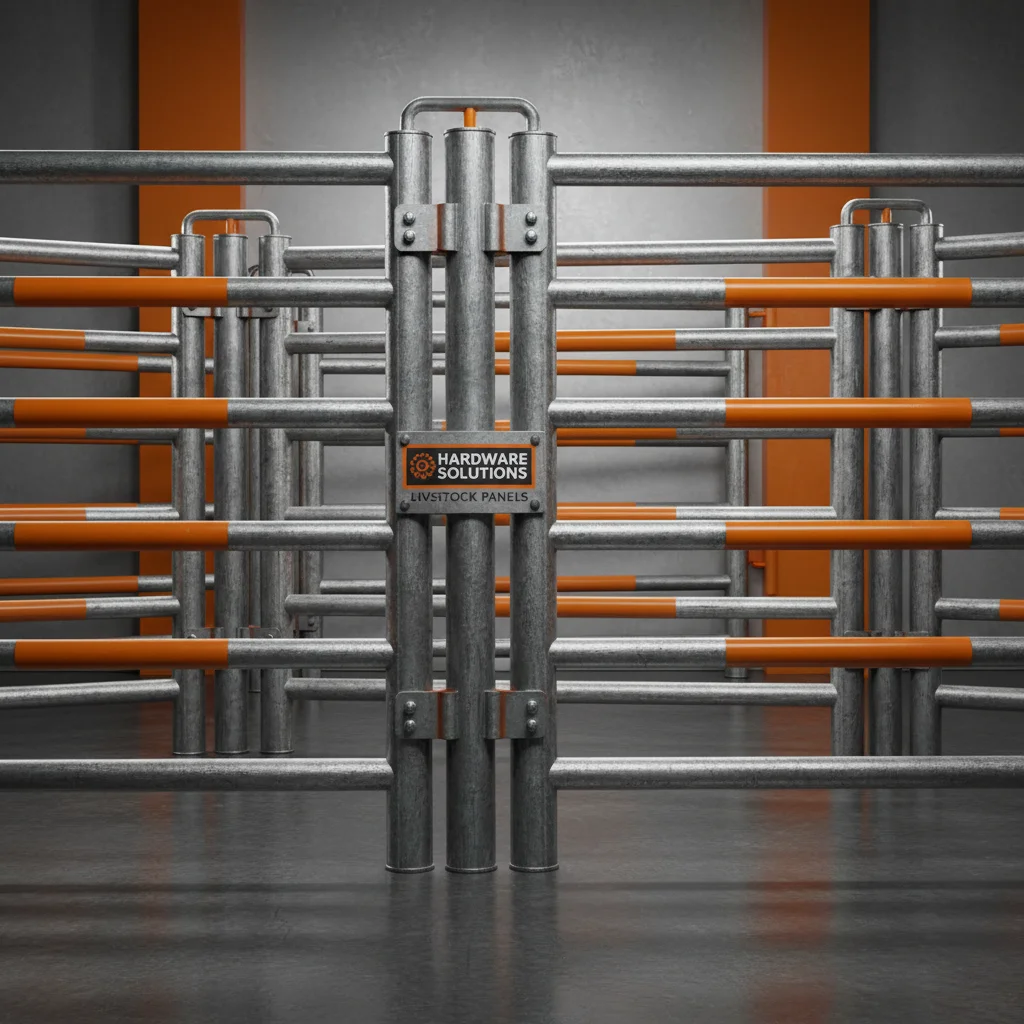
The implementation of high-quality 12 livestock panels represents a critical advancement in modern agricultural infrastructure, blending structural rigidity with precision engineering. In an era where livestock management requires both efficiency and animal welfare, the transition to 3D welded wire mesh provides a dependable barrier that resists deformation and environmental wear.
Globally, the demand for robust containment solutions has surged as farms scale their operations to meet increasing food security needs. By utilizing premium-grade iron and stainless steel wires, these panels offer a sophisticated combination of a flat, aesthetically pleasing surface and a rigid structure, ensuring that containment is not just functional but also professional in appearance.
Understanding the technical specifications of 12 livestock panels—from wire gauge standards to galvanizing treatments—allows producers to optimize their investment. By reducing replacement costs and enhancing site security, these industrial-grade solutions provide long-term asset value for agricultural and construction projects worldwide.

Global Relevance of 12 Livestock Panels
In the global agricultural sector, the necessity for reliable containment is paramount. The use of 12 livestock panels addresses a critical challenge: the balance between permeability and strength. As international standards for animal husbandry evolve, the shift toward precision-welded mesh ensures that livestock are kept secure while maintaining visibility and ventilation.
Furthermore, the industrial application of these panels extends beyond the farm. In regions experiencing rapid infrastructure growth, the same 3D welded wire technology is utilized for temporary security and construction reinforcement, making these panels a versatile tool in global logistics and urban development.
Defining the Engineering of 12 Livestock Panels
At its core, 12 livestock panels refer to precision-engineered welded wire mesh units designed for heavy-duty containment and structural support. Unlike traditional woven wire, these panels are created using advanced welding technology that fuses mild steel or stainless steel wires at every intersection, resulting in a rigid, flat surface that resists sagging and warping over time.
The "3D" aspect of the design ensures that the panels maintain their shape under external pressure, providing a consistent opening size that ranges from 1/4" to 4". This technical precision is vital for ensuring that livestock of various sizes cannot breach the perimeter, while also providing the necessary tensile strength for industrial environments.
From a humanitarian and industrial perspective, the ability to customize these panels in both metric and imperial dimensions allows for rapid deployment in diverse geographic regions. Whether used for food processing hygiene or large-scale agricultural infrastructure, the engineering focus remains on stability and durability.
Core Components of High-Performance Panels
The durability of 12 livestock panels is primarily driven by the material selection. By utilizing premium mild steel or stainless steel, manufacturers can ensure that the panels withstand significant physical impact. The adherence to BWG (Birmingham Wire Gauge) standards, ranging from BWG 12 to BWG 24, allows users to select the exact thickness required for their specific livestock or security needs.
Surface treatment is the second most critical component. Hot-dip galvanizing provides a thick zinc layer that offers superior corrosion resistance for outdoor use, whereas electrogalvanizing offers a smoother finish for indoor applications. Additionally, the option for powder-coated spraying allows these panels to integrate seamlessly into commercial aesthetics without compromising their structural integrity.
Finally, the precision of the weld points is what separates industrial-grade 12 livestock panels from standard fencing. Automated welding lines maintain exact tolerances, preventing the deformation typically seen in manual welding. This ensures that the mesh remains perfectly flat, which is especially critical when the panels are used for concrete reinforcement.
Practical Applications and Global Use Cases
The versatility of 12 livestock panels allows them to be deployed across a multitude of industries. In the agricultural sector, they are used to create secure pens and grazing boundaries that protect animals from predators and prevent escape. In the food processing industry, stainless steel variants are utilized to meet strict hygiene standards due to their resistance to chemical cleaning agents.
Beyond agriculture, these panels are indispensable in the construction sector. The specialized black mesh panels are engineered specifically for concrete reinforcement, providing the tensile strength required to prevent structural cracking in foundations and walls. This dual-purpose nature—serving as both a boundary and a structural component—makes them a high-value asset for developers.
Performance Comparison of 12 Livestock Panels Variants
Long-Term Value and Economic Advantages
Investing in premium 12 livestock panels offers a significant Return on Investment (ROI) when compared to standard wire mesh. While the initial procurement cost may be higher, the extended service life—ranging from 10 to 20 years for galvanized options—drastically reduces the frequency of replacements. This long-term durability translates directly into lower operational costs for farm managers and construction firms.
Beyond the financial metrics, there is a profound logical and emotional value in reliability. The peace of mind that comes from knowing that a perimeter is secure and that concrete reinforcements will not fail adds a layer of trust to the infrastructure. By minimizing maintenance needs and labor expenses through modular, rapid installation, these panels allow operators to focus on their core business rather than constant repairs.
Future Innovations in Wire Mesh Technology
The future of 12 livestock panels is being shaped by the drive toward sustainability and automation. We are seeing a shift toward "Green Galvanizing" processes that reduce the environmental footprint of zinc coating while maintaining high corrosion resistance. Additionally, the integration of smart monitoring sensors into fence lines is becoming a possibility for high-security agricultural zones.
Digital transformation in manufacturing is also enhancing the precision of these panels. The use of AI-driven quality assurance systems ensures that weld strength and coating thickness are consistent across every single batch, eliminating the human error associated with traditional inspections. This ensures that every panel meeting international standards is identical in performance.
Furthermore, the development of hybrid alloys—combining the strength of steel with the lightness of advanced composites—promises to create livestock panels that are even easier to transport and install without sacrificing the rigid structure required for large animal containment.
Overcoming Challenges in Panel Deployment
One of the primary challenges in the deployment of 12 livestock panels is the risk of deformation during international transit. To solve this, strategic packaging and reinforced shipping crates are employed, ensuring that the flat surface of the 3D mesh arrives intact and ready for installation.
Another common limitation is the environmental degradation caused by saltwater or highly acidic soils. The solution lies in the strategic selection of surface treatments; for these harsh environments, hot-dip galvanizing or the use of high-grade stainless steel is non-negotiable to prevent premature oxidation.
Finally, the challenge of customized sizing for diverse livestock species is met through flexible manufacturing. By offering a wide range of opening sizes and custom dimensions, we ensure that the panels provide a perfect fit for any specific safety or containment requirement.
Analysis of 12 Livestock Panels Deployment Efficiency
| Material Variant | Corrosion Resistance | Installation Speed | Lifespan Score (1-10) |
|---|
| Hot-Dip Galvanized | Very High | Rapid/Modular | 9 |
| Electro-Galvanized | Moderate | Rapid/Modular | 6 |
| Stainless Steel | Exceptional | Moderate | 10 |
| Black Steel (Concrete) | Low (Internal) | Rapid/Modular | 8 |
| Powder Coated | High | Rapid/Modular | 7 |
| Mild Steel (Untreated) | Very Low | Rapid/Modular | 3 |
FAQS
Hot-dip galvanizing involves immersing the panels in molten zinc, creating a thicker, more durable layer that is ideal for outdoor exposure and harsh weather. Electrogalvanizing uses an electrical current to apply a thinner zinc layer, resulting in a smoother, more aesthetic finish that is best suited for indoor environments or mild conditions where appearance is a priority.
Yes, we provide specialized black mesh panels designed specifically for concrete reinforcement. These panels offer the high tensile strength and bonding capability necessary to prevent cracking in structural concrete, ensuring the long-term integrity of construction projects.
Absolutely. For food industry applications or high-hygiene livestock zones, stainless steel is highly recommended. Its superior resistance to chemical cleaning agents and inherent hygiene properties prevent contamination and rust, making it the industry standard for food-grade environments.
Yes, customization is a core part of our service. We offer mesh opening sizes ranging from 1/4" x 1/4" up to 4" x 4". This ensures that your livestock panels are tailored to the exact safety and containment requirements of your specific animals, preventing escapes while maintaining airflow.
We utilize high-precision automated welding machines combined with specialized tensioning frames. This process ensures that every intersection is welded with consistent force and that the panel is held in place during cooling, resulting in a perfectly flat surface free of warping.
Yes, we can apply a powder-coated spray finish after the welding or galvanizing process. This not only allows you to choose specific colors to match your commercial branding or residential aesthetics but also adds an additional layer of environmental protection against oxidation.
Conclusion
In summary, the adoption of precision-engineered 12 livestock panels provides a comprehensive solution for modern containment and structural needs. By integrating high-grade materials, advanced galvanizing treatments, and rigorous automated welding, these panels deliver an unmatched combination of durability, aesthetics, and ROI. Whether utilized in large-scale agriculture, food processing, or industrial construction, the shift toward 3D welded mesh ensures a secure, professional, and long-lasting infrastructure.
Looking forward, as the industry moves toward smarter and more sustainable materials, the importance of choosing a supplier committed to precision and quality cannot be overstated. We recommend assessing your specific environmental conditions—such as soil acidity or humidity—to select the ideal surface treatment for your project. For those seeking to enhance their site security and operational efficiency, investing in industrial-grade welded mesh is a strategic move toward long-term asset value. Visit our website for more information: www.haotianmesh.com.