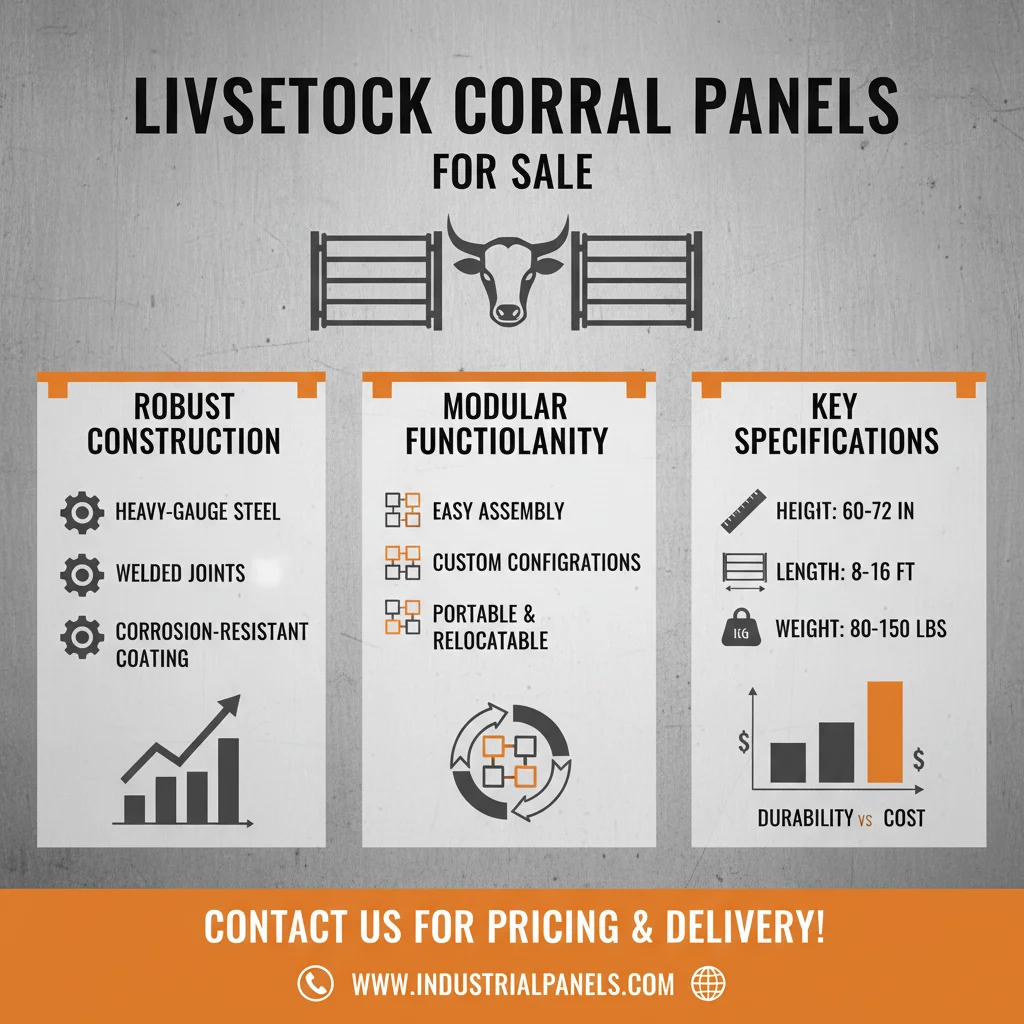
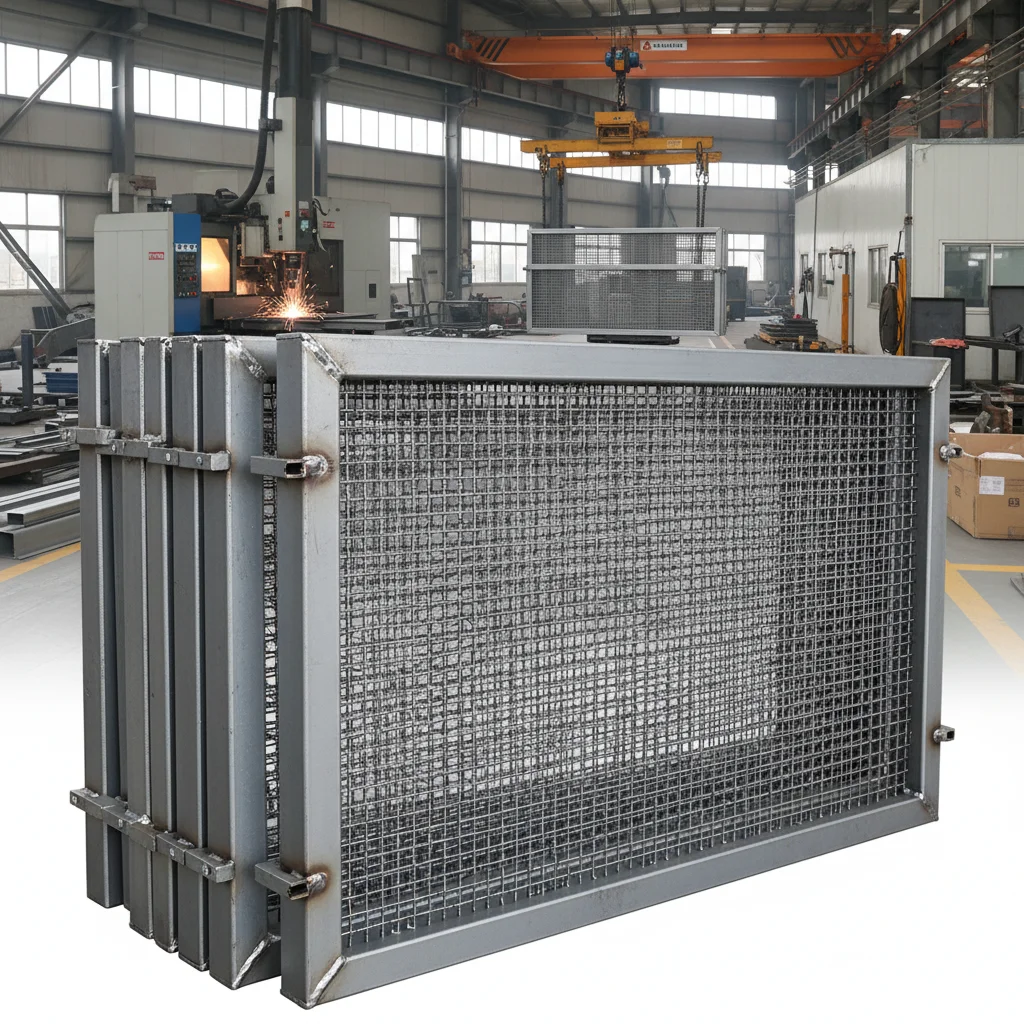
The demand for high-quality perimeter security has evolved rapidly, leading many industrial and agricultural sectors to seek robust, scalable solutions. In the realm of temporary containment and site security, the ability to deploy strong barriers quickly is essential for maintaining safety and operational flow. This is where the strategic sourcing of industrial-grade panels becomes a critical component of project management.
Across global markets, from the construction sites of North America to industrial zones in Australia, the efficiency of a site often depends on the reliability of its fencing. When organizations look for wholesale cattle panels and temporary fencing, they are not just buying steel; they are investing in a system that prevents unauthorized access and ensures regulatory compliance.
Understanding the nuances of material strength, mesh openings, and deployment speeds allows procurement managers to maximize their return on investment. By opting for professional manufacturing standards, businesses can transition from costly permanent installations to flexible, reusable systems that adapt to the shifting needs of the modern industrial landscape.

Global Relevance of Industrial Fencing Systems
The global infrastructure boom has intensified the need for secure, temporary boundaries. Whether managing large-scale urban development in Canada or securing remote mining sites in Australia, the reliance on standardized, high-tensile steel systems is paramount. These systems address the urgent challenge of securing vast perimeters without the prohibitive cost and time associated with permanent concrete-and-steel walls.
By integrating high-grade steel and precision welding, manufacturers can now provide solutions that meet rigorous ISO and global safety standards. This scalability ensures that regardless of the geographic location or environmental condition, the perimeter remains intact, protecting both the assets within and the public without.
Defining the Scope of Temporary Perimeter Solutions
In professional terminology, these systems refer to modular, round-pipe temporary fencing engineered for rapid deployment and superior security. Unlike traditional fixed fencing, these panels are designed to be transported in bulk and assembled on-site within hours, utilizing a system of clamps and stable base feet.
The connection to modern industrial needs is clear: the "temporary" nature does not imply a lack of strength. On the contrary, using premium steel with diameters up to 5.00mm ensures that these panels can withstand significant impact, making them suitable for high-traffic industrial zones and event management where crowd control is essential.
When sourcing wholesale cattle panels and similar livestock or temporary barriers, the focus is on the balance between weight for transport and rigidity for security. This modularity allows for a "plug-and-play" approach to site security that was previously impossible with rigid fencing.
Core Components of High-Strength Steel Panels
The structural integrity of these systems relies on three primary factors: wire gauge, frame diameter, and welding precision. Utilizing wire diameters between 3.00mm and 5.00mm allows the panel to resist deformation, while the round pipe frame—available in 25mm to 48mm—provides the necessary skeletal support to maintain verticality.
A critical element often overlooked when ordering wholesale cattle panels is the mesh opening configuration. Variations such as 50x100mm or 75x75mm are not arbitrary; they are engineered to balance visibility with containment strength, ensuring that the barrier is effective against its intended target.
Finally, the stability is anchored by specialized base options. Plastic base feet, which can be filled with concrete, provide a heavy-duty foundation that prevents the fence from tipping in high-wind areas, making the entire system viable for outdoor use in unpredictable climates.
Practical Applications and Use Cases
These systems are deployed across a diverse array of sectors. In the construction industry, they serve as the first line of defense, delineating safe zones and preventing unauthorized entry into hazardous areas. The ability to rapidly disassemble and move the fence as the project progresses makes it an indispensable tool for site managers.
Beyond construction, these panels are widely used in event management for crowd control and in industrial zones to partition high-risk areas. In regions like the USA and Canada, they are frequently utilized for temporary livestock containment or as a quick-setup perimeter for agricultural shows, proving the versatility of high-grade wire mesh.
Comparative Performance of Perimeter Solutions
Tangible Advantages and Long-Term Value
The primary value proposition of these systems lies in their exceptional ROI. Unlike permanent fencing, which is a sunk cost once installed, modular panels can be reused across dozens of different project cycles. This reusability dramatically lowers the long-term cost of site security for rental companies and large contractors.
Furthermore, the logistics are optimized through palletized packaging, which reduces transit damage and simplifies unloading via forklifts. This professional approach to shipping ensures that when you order wholesale cattle panels or temporary fence kits, the components arrive in zero-defect condition, ready for immediate deployment.
Future Trends in Metal Fencing Innovation
The industry is moving toward "smarter" materials and more sustainable coatings. We are seeing a shift toward advanced galvanization processes that extend the lifespan of the steel in corrosive coastal environments, ensuring that the panels remain rust-free for years of repeated use.
Digital integration is also emerging, with some firms integrating RFID tags into their modular panels for better inventory control. This allows large-scale project managers to track exactly how many panels are deployed on-site and how many are returning to the warehouse, minimizing loss and theft.
Additionally, there is a growing demand for customization. Instead of one-size-fits-all, manufacturers are offering tailored dimensions—such as widths up to 3300mm—to accommodate specific architectural requirements and security gaps, making the systems more adaptable than ever.
Challenges and Expert Solutions in Deployment
One of the most common challenges in temporary fencing is stability during extreme weather. In high-wind regions, lightweight panels can become liabilities. The expert solution is the use of concrete-fillable plastic feet, which significantly increases the base weight without requiring permanent ground penetration.
Another hurdle is the logistical cost of shipping heavy steel across oceans. To solve this, strategic container loading plans are implemented to maximize every cubic centimeter of space. By optimizing the pallet layout, manufacturers can ship up to 580 containers annually while keeping shipping costs per unit low.
Lastly, labor costs for installation can eat into project margins. The transition to a refined clamp-and-pin system allows for rapid assembly by unskilled labor, reducing the hours required to secure a perimeter and allowing projects to start faster.
Analysis of Temporary Fencing Specifications and Performance
| Panel Specification |
Security Level |
Deployment Speed |
ROI Rating |
| Standard 2100x2400mm |
High |
Very Fast |
9/10 |
| Heavy Duty (5mm Wire) |
Maximum |
Fast |
8/10 |
| Custom Large (3300mm) |
Medium-High |
Moderate |
7/10 |
| Light-Duty (3mm Wire) |
Medium |
Instant |
10/10 |
| Concrete Base Kit |
Very High |
Moderate |
9/10 |
| Standard Livestock Mesh |
High |
Fast |
8/10 |
FAQS
The most popular dimensions are 2100x2400mm and 1800x2400mm, which offer a standard height for security and a manageable width for transport. However, we provide a wide range of options, including widths up to 3300mm, to suit specific site requirements and minimize the number of joints in a long perimeter.
Yes, our plastic base feet are specifically engineered to be fillable. Customers in high-wind areas or those securing high-value assets can fill these bases with concrete, providing a significant increase in weight and stability without the need for drilling into the ground.
Absolutely. While we offer standard openings like 50x100mm and 75x75mm, we can manufacture special sizes tailored to your security needs. This is particularly useful when the barrier must prevent small animals from passing through or when specific visibility requirements are mandated.
All panels, fence feet, and clamps are professionally packed by pallets. This ensures they are securely braced against movement during sea freight and allows for efficient unloading via forklift, reducing the risk of bending or scratching the galvanized finish.
We manufacture approximately 580 containers of temporary fence panels annually. This massive capacity allows us to maintain a steady supply for large-scale international projects in the USA, Canada, and Australia, including specialized chain link and square tube options.
We provide a selection of frame and middle pipe diameters, including 25mm, 32mm, 42mm, and 48mm. This allows clients to choose the right balance between weight (for easier transport) and structural strength (for higher security requirements).
Conclusion
In summary, the strategic deployment of high-strength, modular fencing systems provides an unparalleled balance of security, speed, and cost-effectiveness. By focusing on precision welding, high-grade steel diameters, and optimized logistics, businesses can secure their sites effectively while maintaining the flexibility to reuse materials across multiple projects. From custom mesh openings to concrete-fillable bases, the attention to technical detail ensures these panels perform under the most rigorous conditions.
As the global construction and industrial landscape continues to evolve, the shift toward modularity and sustainability will only accelerate. We recommend that procurement managers prioritize quality over the lowest initial cost, as the long-term ROI of a durable, reusable system far outweighs that of a disposable alternative. To secure your site with industrial-grade solutions, visit our website: www.haotianmesh.com.